

Torquay Museum: Siberian discovery may shed new light on Torquay Neanderthals
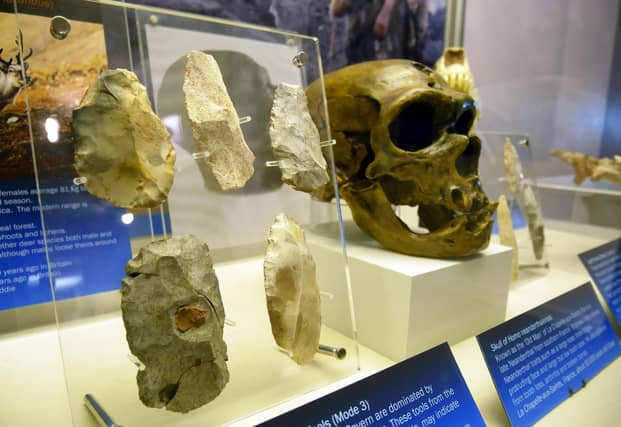

Barry Chandler, Torquay Museum: A Siberian cave site rich in Neanderthal remains has yielded DNA evidence that offer fresh insights in the lives and social organisation of Neanderthals. This incredible discovery may help us to understand the finds from
Barry Chandler, Torquay Museum:
A Siberian cave site rich in Neanderthal remains has yielded DNA evidence that offer fresh insights in the lives and social organisation of Neanderthals.
This incredible discovery may help us to understand the finds from Torquay's Kents Cavern.
Back when the Neanderthals inhabited Eurasia, there were no countries or borders. For more than 250,000 years, they made this entire region their home.
Evidence of Neanderthals have been found as far east as Uzbekistan, while the tools from Kents Cavern are the most westerly found so far.
Across this huge range, Neanderthals display common features. A large face, eyes and nasal area, a long, low cranium, a lower jaw without a chin and a heavy brow ridge.
They also all have a very similar range of technology. The Neanderthals of western Asia may be the source of Neanderthal DNA in modern human populations. We are all a little bit Neanderthal.
Until late last year, experts have mostly speculated about how Neanderthals organised their hunter gather groups. However, DNA evidence from Chagyrskyra Cave in Siberia appears to have confirmed what has long been thought, that they lived in clans or family groups.
For the first time, researchers have identified a set of closely related Neanderthals: a father and his teenage daughter and two other, more-distant relatives.
The discovery of the family and seven other individuals - including a pair of possible cousins from another clan - in the same cave, along with two more from a nearby site, represents the largest ever cache of Neanderthal genomes.
The findings also suggest that Neanderthal communities were small, and that females routinely left their families to join new groups.
“Gleaning insights into kinship and social structure is new territory for ancient-genome studies, which have typically focused on broader population history,” said Krishna Veeramah, a population geneticist at Stony Brook University in New York.
“The fact that we can do this with Neanderthals is incredible.”
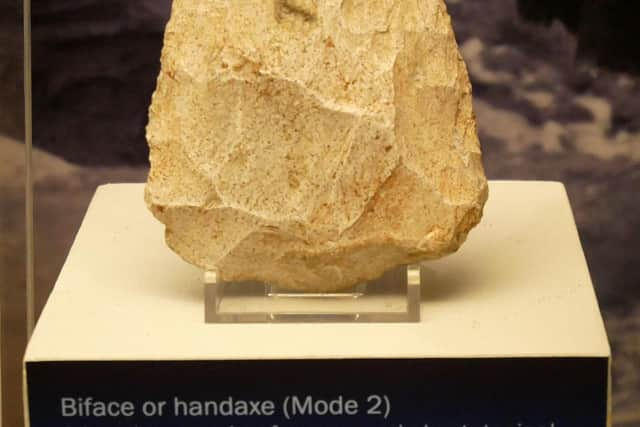
A team of researchers, led by palaeogeneticist Laurits Skov at the Max Planck Institute for Evolutionary Anthropology in Leipzig, Germany, studied the Siberian cave’s inhabitants in great depth.
They extracted DNA from 17 other samples of ancient-human remains from Chagyrskaya, as well as several from a nearby cave called Okladnikov.
Rebecca Wragg Sykes, an archaeologist at the University of Liverpool, who also worked on the Neanderthal finds from Kents Cavern, is surprised that remains from so many related individuals who were part of highly mobile hunter-gathering communities have been recovered from one site.
“To me, it suggests that this community of Neanderthals either tend to stay in their sites for quite a long time, or they revisit them very often,” she said.
Chagyrskaya Cave is also full of bison and horse remains, and Skov and his colleagues think the site served as a hunting camp of sorts during these animals’ seasonal migrations.
These hunts could have created opportunities for disparate Neanderthal communities to meet and mix, Sykes suggests.
“I don’t think Neanderthals were planning to meet up with each other, but it offers that opportunity.”
Find out more about Neanderthals in Torbay at the Ancestors Gallery.