

Torquay Marine reflects after Antarctic World Record attempt cut short
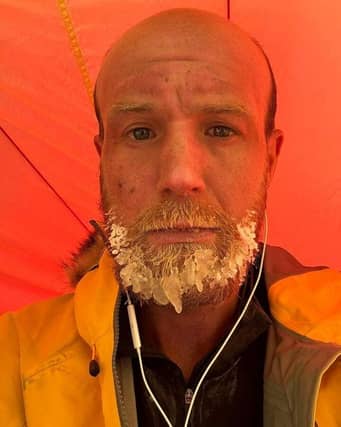

Sam Cox was 600km into his journey when he needed to be medically evacuated
A former Royal Marine from Torquay has opened up on the medical emergency that ended his dream to set the World Record for the fastest solo and unsupported crossing of Antarctica.
The project, known as Frozen Dagger had been four years in the making.
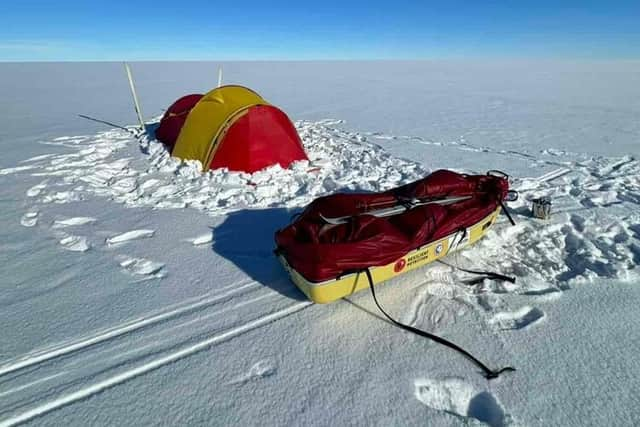
Sam said: “I was feeling confident and strong given that the weight of the pulk was becoming lighter, which would allow me to start upping the distances I was travelling each day.
“I was just under halfway in terms of time and I’d travelled approximately one-third of the total distance. With the final 400km of the expedition being downhill, I was confident of finishing in 75 days.”
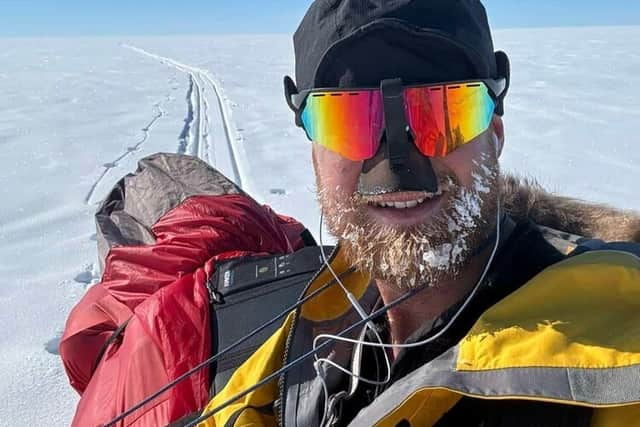
Little did he know that would be the last call of the expedition.
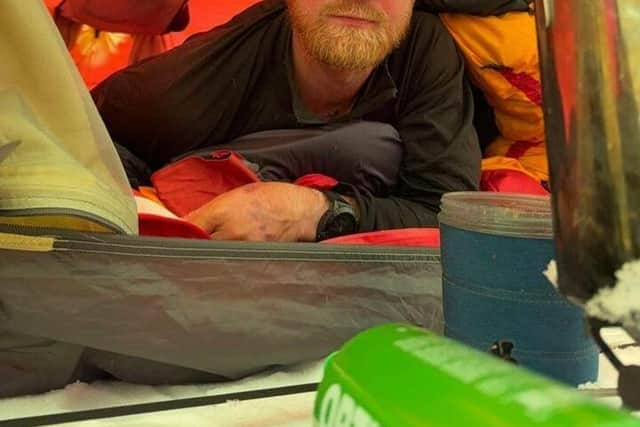
He said: “When I rang the doctors to discuss my symptoms I wasn’t expecting to be organising my extraction from the ice. It caught me off guard and to be completely transparent there were a few sobs in the tent upon ending the call.”
Sam was evacuated that night due to a suspected kidney infection.
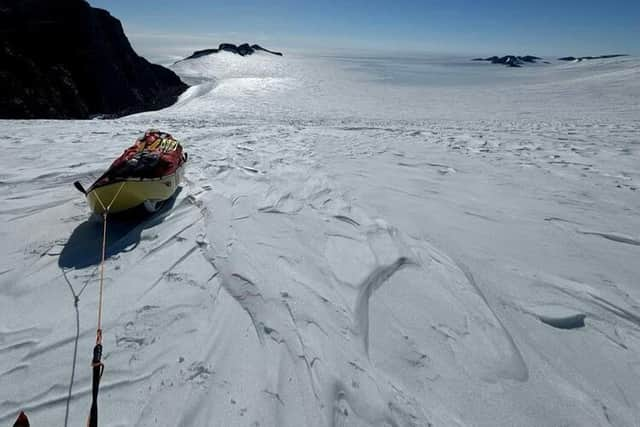
Looking back, he said: “While at the time I resented the decision to end the expedition, in the cold light of day it was the correct decision for my long-term health, especially with a young family at home.”
Back in Torquay, Sam reflected on the journey.
“It has been difficult processing that this is the end of a four-year project that did not achieve its aim,” said Sam.
“To not even reach the South Pole has also been something that has played on my mind. As for the next steps, what my future plans are, and when I am going back, I honestly don’t know and I still need some time and space to comprehend the expedition given the rather abrupt ending, which has been mentally challenging to understand.
“I will be back, but in the meantime, I need some time and space to reintegrate myself back into the normal routine and fully unpack the expedition (literally and metaphorically).
“Thank you to the sponsors and partners who supported the expedition. Even getting to the start line would not have been possible without you and I am eternally grateful. Thank you to everyone who cheered me on, I was getting regular updates from home and being passed on the encouragement, which helped enormously when skiing.”
Abi, Sam’s wife and a key part of his expedition team, added; “He’s incredible and given this expedition everything. I know how much he would have been pushing to carry on, however I’m glad that there are an amazing team of medical professionals supporting him to make those tough calls.
“The most important thing is for him to come back safely and in good health.”