

Tales from the Storyteller: Nature-worshipping Druids feature in Dartmoor folklore
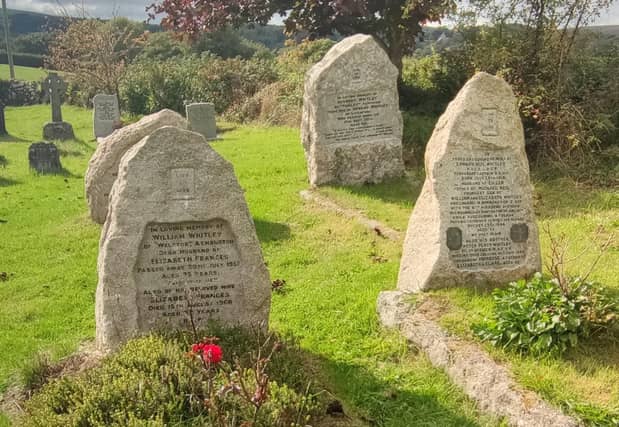

There is no actual historical evidence to suggest that Druids ever lived or practised their religion on Dartmoor but they do feature in its folklore, even giving their name to various features in the landscape, and on the Ordinance Survey map. Druids wer
There is no actual historical evidence to suggest that Druids ever lived or practised their religion on Dartmoor but they do feature in its folklore, even giving their name to various features in the landscape, and on the Ordinance Survey map.
Druids were high-ranking priests in the Celtic religion, practising their own form of paganism, or nature worship.
It’s difficult to trace the activity of Druids, as they were notorious for not making any written records of their religious practices, passing down their rituals by word of mouth.
If they ever did come to Dartmoor, they would have found many stone circles and rows to perform their rites in, as well as an abundance of oak trees, for, in Celtic, Dart means oak, making Dartmoor the moor of the oak, which also played a significant role in their rituals.
It is said that they might have favoured Wistman’s Wood, being a copse of stunted oak trees, as its name might translate as wood of the wisemen, but I prefer the whist idea, the fact it’s to do with the whist hounds and all things Devilish.
However, the wood does contain an upright boulder that has been dubbed the Druid Stone. It’s more correctly known as the Buller Stone, to commemorate a certain Wentworth Buller getting permission from the Prince of Wales, in 1866, to cut down one of the oaks for scientific studies and aging purposes.
Elsewhere on the moor, we have Druid’s Well, Druid's Chair, and even a possible Druid’s Altar in a plantation below Blackingstone Rock, to the north east.
Meanwhile, in the south east, we have a cluster of druidic naming; cottage, mine, plantation, even a hamlet called Druid, just outside Ashburton, in the manor of Buckland.
They received these titles back in the 18th century, so nothing to do with the Druids themselves, but something that might have caught the attention of one William Whitley, who became lord of the manor there in the early 1900s.
The Whitley family moved to Paignton when their father died.
Herbert Whitley went on to found Paignton Zoo, while his brother William married into the Whitehead family, who owned Barton Pines, and went on to perform some well known goodly works.
Barton Pines is quite a haunted establishment, we once held a Halloween investigation there, and while doing research prior to our event, I found out all about William’s acts of benevolence.
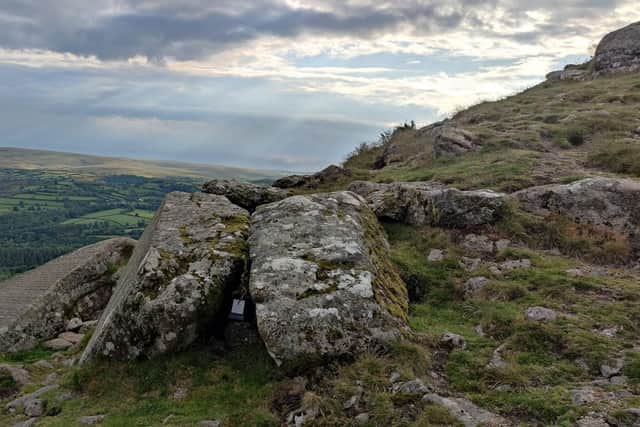
Not only did he commission the bells that hang in Collaton St Mary Church, having them dedicated to members of the Whitehead family, plus their trusty chauffeur, who had all died in the First World War, but when he moved to Buckland, he commissioned the Ten Commandments to be engraved into two slabs of granite that were then positioned at the foot of Buckland Beacon, as a way of giving thanks to the parliament of the day for dismissing proposed changes to the current prayer book.
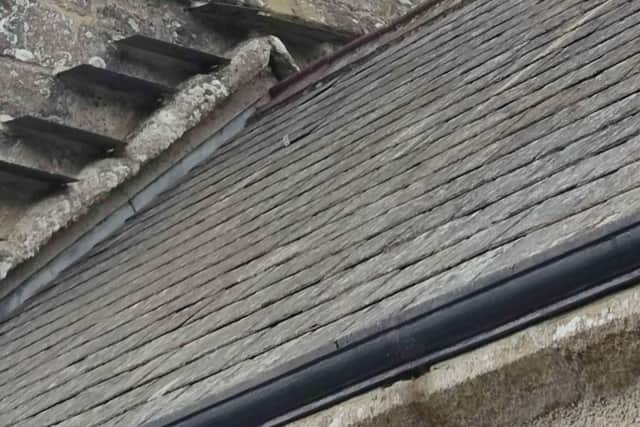
Finally, when his mother died, he commissioned a new clock face for the church at Buckland in the Moor, having, instead of numerals, the phrase 'My Dear Mother' on it, which he dedicated to her memory.
At the same time as I was doing this research, I was also reading a series of books by Andrew Collins, about his adventures with The Black Alchemist.
Basically, the bad guys were corrupting the energy flow around many of England’s sacred sites and using it for their own nefarious ends.
Andrew, along with his Psychic Questing pals, took it upon themselves to thwart The Black Alchemist’s plans, by seeking out the stones inscribed with magical symbols placed at these vulnerable sites, that were draining the sacred energy.
He wrote three books in total, cataloguing their successes, which I enjoyed reading very much, until the closing chapters of the last book.
Here, he brings the story to my beloved Dartmoor, where they seek out a stone buried at Grey Wethers, the unique double stone circle.
Finding, and removing it, they then have a near encounter with the enemy, which scares them so much that they end their questing, and the book ends! Unsettled by learning about this sort of activity on the moors, I was able to contact the author via a friend, and asked him if there were any other incidents on Dartmoor.
He replied, saying they had recovered a further stone at the base of the Ten Commandments Stones on Buckland Beacon. An incident he had never written about, but was happy to share.
The man at their head had identified himself as none other than William Whitley.
Now, the medium wasn’t local, had no knowledge of the history of the stones, so where did she get that name from, unless it was Whitley?
If it was, then why would such an overtly religious man, and staunch Protestant, reveal himself dressed as a Druid, in spirit form?
I have a theory that he may have been a closet pagan, a member of a Neo Druidic sect, similar to Freemasons, who did their goodly works in secret, while worshipping nature.
This might explain why he had been attracted to a parish that contained features named Druid, and why, of all the four Whitley family graves in Buckland churchyard, his is the only one overflowing with moss and heather, and, until recently, been overhung by a tree. A sure sign of a true nature lover.