

Storyteller: The Devil lends a hand
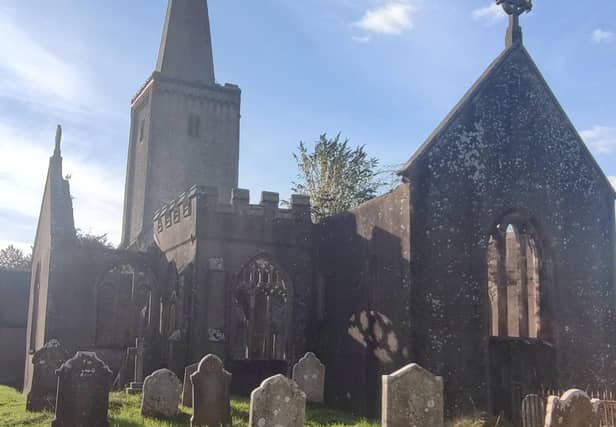

Last week, I wrote about the ruined chapel on the hill in Torquay dedicated to St Michael, the patron saint of protectors. This reminded me of another church that was built in his name, high up on a rocky outcrop at Brentor on Dartmoor. It was commissio
Last week, I wrote about the ruined chapel on the hill in Torquay dedicated to St Michael, the patron saint of protectors.
This reminded me of another church that was built in his name, high up on a rocky outcrop at Brentor on Dartmoor.
It was commissioned by a thankful merchant, whose ship got caught in a violent storm. Fearing that he, and all the ship's crew were going to perish, he prayed to St Michael, asking to be brought safely to land.
In return, he vowed to have built a church, dedicated to the saint, on the highest point he could see.
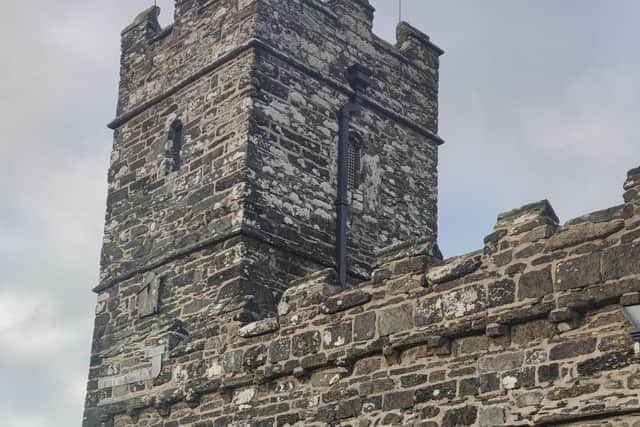
The work started by transporting stone blocks to the top of the hill, where stonemasons could work on them, prior to them being laid in place. At the end of a hard day’s work, everyone downed tools and went home.
The next morning, the workers returned to find all their hard work had been in vain, for at the foot of the hill lay all the blocks of stone and their tools. Someone had moved everything in the night. The merchant suspected this hadn’t been achieved by human hands, he was adamant this was the work of the Devil.
Once again, the merchant beseeched St Michael to help him, for he didn’t want to break his promise to his protector. The angel agreed to keep an eye, and that night, after the workmen had shifted the stone work back to the top of the hill, sure enough, it was the Devil who appeared to cause mischief again.
St Michael challenged him, warning that if he didn’t desist from his meddling, there would be serious consequences. After a brief war of words, and some serious stone throwing - how else do you think some of those rocky outcrops came to be in that area - the Devil gave in and slunk away to lick his wounds.
Across the moor in Buckfastleigh we have another tale of devilish meddling in the construction of a church. Only in this instance, the parishioners wanted it built in the town, at the foot of a hill, whereas the Devil kept moving it to the top.
His reasoning was, if the church was positioned on top of a high, steep hill, the townsfolk would be less likely to attempt the climb to attend services there, thus making it redundant.
As in the Brentor case, construction started in the right place, while overnight stonework and tools were moved to the wrong place. Once this state of affairs had been discovered, the builders undertook the arduous task of moving it all back down the hill again.
This ritual repeated itself over several days and nights, until the townsfolk, lacking any guardian angel watching over their goodly works, gave in to the machinations of the Devil, and finished the construction on top of the hill.
At the same time, having realised the reason for this interference, they commissioned a set of stone steps to be laid, enabling easier access to and from the church, ensuring good attendances at services for many years to come. Sadly, this is not the case today, but that’s a story for another time.
By coincidence, I was recently flicking through some back issues of a paranormal publication, when I spotted a reader’s letter referring to a church that moved, in the village of Dorrington, Lincolnshire. The church in question is dedicated to St James and St John, and is situated on a prominent hilltop, overlooking the village.
The letter goes on to state that the Devil may have had a hand in its construction on top of the hill. It was originally intended to be built in the village, but, as in the examples of the two Dartmoor churches, something persistently interfered, moving their building materials to the top of the hill.
Likewise, the builders tried to rectify the situation over the course of several days and nights, then in the end they, too, were forced to give in and build on top of a high hill. The similarity between this tale and the Dartmoor ones, intrigued me so much that, I wanted to know more.
A bit of research not only confirmed the story as referenced in the magazine but revealed a much older legend, as depicted on wooden boards in the church grounds. This version refers to a Saxon chieftain, called Tochti, who wished to build a chapel in Dorrington, at the foot of the hill, at a site coincidentally known as Chapel Hill.
He intended to use the stonework from a ruined pagan temple, that used to stand on top of the hill, to construct a new place of worship. As in the other stories, all his work was moved overnight to the top of the hill, much to his frustration.
The story differs in that he placed a guard on his work, having brought it all back down, to see if it happened again. The guard unhelpfully falls asleep, but wakes up in time to witness a party of small demons coming out of an old oak tree at the foot of the hill, who proceed to move all the stones back to the top.
When the guard reports back to Tochti in the morning, the chieftain realises he is no match for the Devil’s work, and continues building on top of the hill instead, ostensibly building over the site of the pagan temple, thus protecting a sacred site.
This is very similar to what allegedly happened at St Michael’s Chapel in Torquay. A building placed on top of a sacred site revered by pagans. Is this further proof that Christians deliberately built on these sites in order to preserve them?
I love doing my research, especially when it throws up similarities in tales like these from other areas. If nothing else, it goes to show we aren’t the only part of the country that experienced visitations from the Devil.