

STORYTELLER DAVID PHILLIPS: : The curious works of Keble Martin

Most of the stories I share in my articles are based on well-known myths and legends, passed down by word of mouth, usually by moormen sitting round their campfires as darkness falls around them, in an attempt to scare their companions. So, it’s good to
Most of the stories I share in my articles are based on well-known myths and legends, passed down by word of mouth, usually by moormen sitting round their campfires as darkness falls around them, in an attempt to scare their companions.
So, it’s good to know that Dartmoor still has the power to mystify and intrigue us when we come across curious artefacts in the landscape.
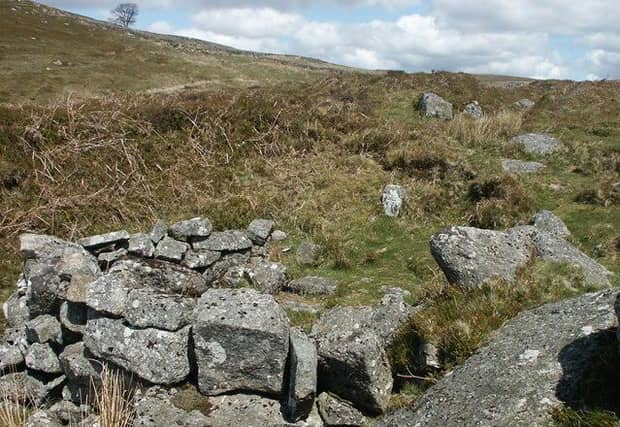
Venturing out from the Buckfastleigh side of the moor, starting at Lud Gate, a well-worn track brings you to the valley of the Western Wella Brook, in the shadows of an old farmstead, Huntingdon Warren, and an ancient cairn, the Heap of Sinners.
Here, you will find a stone-built shelter, resembling the huts the tinners built themselves for protection from the elements, while working on the moor.
While there is evidence of tin mining in this area, this doesn’t belong to the industry.
Upon closer inspection, you notice a set of grassy steps leading from the stone wall to an upright boundary stone type rock with a cross inscribed in it, sheltered in a little dell beside the brook.
A bit of research reveals this spot is known as Mattins Corner, nothing to do with the monks at Buckfastleigh, who would have farmed this land, instead it was constructed, back in 1909, by one William Keble Martin, and his two brothers, Arthur and Jack.
They were the sons of the Reverend Martin from Dartington, and when they started having camping holidays, with their friends, at that spot on the moors, their religious upbringing compelled them to construct their own place of worship for use during their stays.
Keble and Jack both took after their father, becoming men of the cloth, while Arthur became an architect, which meant that their little chapel became quite a sacred site for them during their annual visits.
This all sounds very quaint and idyllic, but jump forward to 1936, many years after those innocent days of summer, when the grid referencing system, used on modern day Ordinance Survey maps, was first introduced, and imagine the shock of discovering that your purpose-built moorland shrine was positioned directly on top of the grid reference 666 666... the number of the beast!
How could those boys, back in 1909, have known that their camping site would need holy protection in years to come? Or was there a bit of divine intervention at work here?
He was able to draw a floor plan of his 'Dream Church', and felt he just had to get it built.
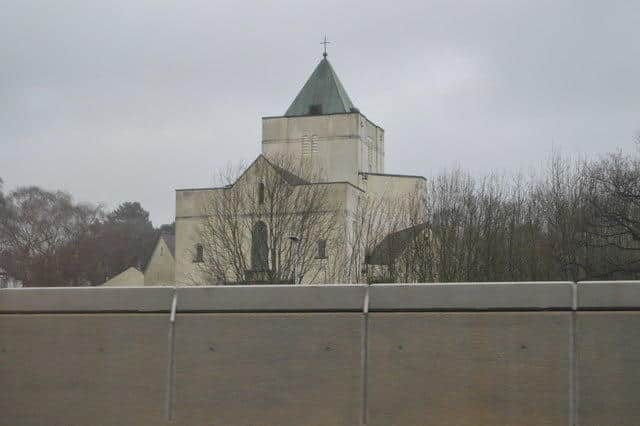
Showing his drawings to his brother, Arthur, the architect, between them they got it built, and it stands in Milber, outside Newton Abbot, overlooking the new dual carriageway, dedicated to St Luke the Evangelist.
The church is particularly noticeable for its Byzantine style of design, having not one but three different aisles facing towards the altar, overseen by a central pulpit.
This fine place of worship is now a listed building, and stands as a suitable memorial for the vision of Keble Martin.
He retired in 1949, from presiding over his own parish, freeing up his time to finally complete a project he had spent most of his life compiling, The Concise British Flora in Colour, complete with his own illustrations, for which he is best remembered.
This was published in 1965, followed by his autobiography, entitled Over the Hills, in 1968, acknowledging his love for Dartmoor, and the special influence it played in his life.
Having read Over the Hills, and collected the four Royal Mail stamps that featured illustrations from his flora book, I was inspired to discover more.
In the early days of my group, TIP, we were allowed a personal visit to his 'Dream Church', and I got to stand in his pulpit.
The thing that has intrigued me the most about him, having visited Keble Martin’s Church many times on the moors, is how he and his brothers had the foresight to build it on the very spot that became associated with the Devil himself.