

Rare pigeon hand-reared at Paignton Zoo marks a milestone


Once on the brink of extinction, dedicated conservation efforts have significantly boosted their population
Paignton Zoo is celebrating after successfully hand-rearing a rare pink pigeon squab for the first time.
This remarkable achievement is thanks to the dedicated efforts and expertise of the zoo’s bird team.
Pink pigeons, endemic to Mauritius, are on the red list for both the International Union for Conservation of Nature and BirdLife. Once on the brink of extinction, their wild numbers were thought to have been as low as nine in 1991.
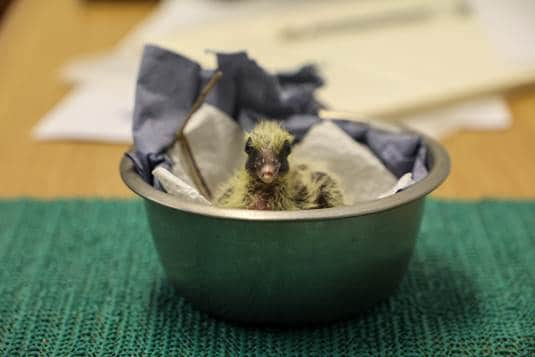
Above: Newly hatched pink pigeon squab is hand-reared by Paignton Zoo’s expert bird keepers. Image: Paignton Zoo
Tom, who has worked as a bird keeper at Paignton Zoo for more than 27 years, developed an innovative technique for hand-rearing the baby birds – also known as squabs - that have been abandoned or orphaned by their parents. He has now been teaching this unique hand-rearing method to others for a number of years.
Tom said: "Instead of using conventional crop tubing, I developed a method which involves attaching a carefully sized catheter to a syringe which can be gently placed on the squab’s tongue. This approach allows the squabs to naturally consume the hand-rearing formula, eliminating the need for crop tubing, which can be stressful and harmful to the birds.”

Above: Keeper Tom Tooley with Paignton Zoo’s pink pigeon squab, now fully grown. Image: Paignton Zoo
The goal is to ensure the long-term survival of threatened species through collaboration among zoos and organisations, such as the Mauritian Wildlife Foundation. The MWF is the largest non-governmental organisation in Mauritius dedicated exclusively to protecting the nation’s threatened plant and animal species, including the endemic pink pigeon.
In 2014, Tom was first invited to assist the MWF conservation efforts for pink pigeons. Tom’s work included training MWF staff in his special hand-rearing technique to increase the chances of pink pigeon squab survival. He has returned a number of times since then and looks forward to jetting off again in early November.
Stephen Kings, Chief Executive Officer for Wild Planet Trust, said: "It’s been a fantastic year for our bird breeding programmes. Tom’s skilled approach to hand-rearing this squab, along with the collaborative efforts of our dedicated bird team, is yet another testament to our zoo-based expertise in wildlife conservation.”
Other successes the zoo has celebrated in 2024 include the “Love Lagoon” flamingo programme this summer, which resulted in a number of healthy chicks, including one raised by a same-sex pair. Additionally, in April, Paignton Zoo celebrated the successful fledging of a Socorro dove, a species extinct in the wild.