

Brixham's fishermen on the price of Brexit, as Burnham raises the European question
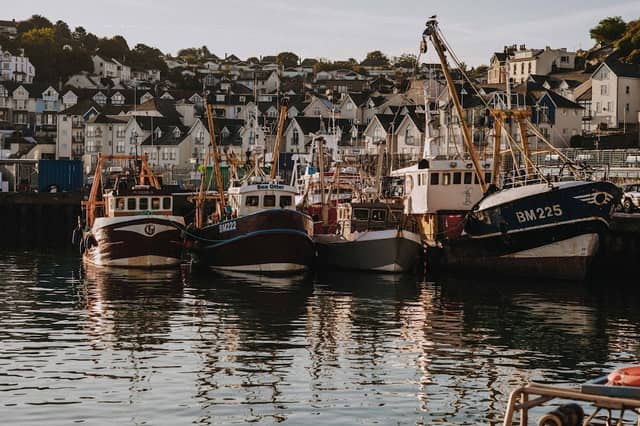

Labour leader Andy Burnham has reignited a debate about Britain's long-term relationship with the EU, saying it is crucial for the country's future, as Brixham's fishermen continue to feel the impact of Brexit on their trade with European buyers.
Prime Minister Andy Burnham's declaration this week that Brexit has “done more harm than good” has reignited a debate with particular resonance in Brixham, whose fishing industry has felt Britain's departure from the EU more keenly than most.
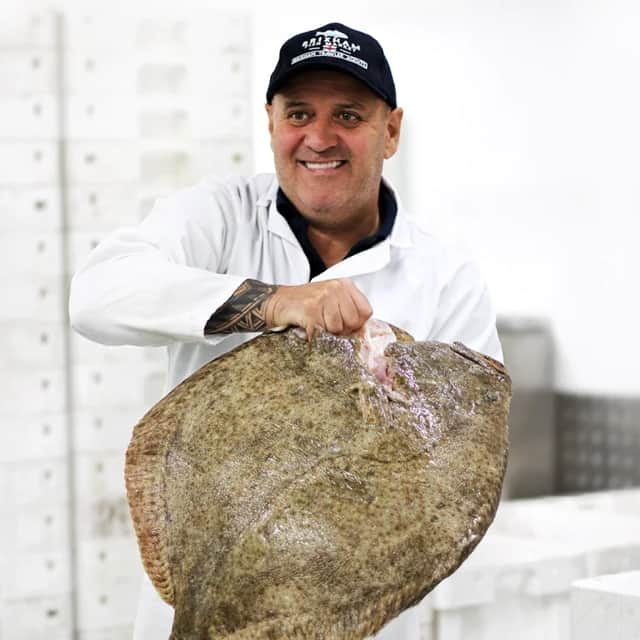
Barry Young, managing director of Brixham Trawler Agents, who has worked in the port's fishing trade since joining the company in 1993, said Brexit had burdened the trade in fish to European buyers with additional administration. “That makes the process more time-consuming and costly, and it can cause complications for us and for EU buyers," he said. "Demand for Brixham fish has stayed strong, and the market has continued to grow, but the extra requirements are a real cost on a perishable product.”
Speaking at the Labour Party conference, Burnham said Britain could not chart its course for the next decade without confronting the question of its long-term relationship with the EU, still its largest trading partner. He announced that an EU summit, expected in November, would examine options for closer economic integration, potentially including a return to the single market. In a subsequent interview, he went further, saying it was his personal view that it is “better” to be closer to Europe, though he cautioned that no decisions would be rushed.
Brexit was sold to fishing communities as a moment of liberation. In a joint announcement in July 2018, the then environment secretary, Michael Gove, and prime minister, Theresa May, said: “Outside the EU, the UK will be an independent coastal state and will regain control of our waters and natural resources, as well as the flexibility to negotiate with other countries and ensure stocks are fished sustainably.”
Prior to Brexit, the UK was subject to the EU’s Common Fishery Policy, which was originally designed to increase productivity, stabilise markets and provide reasonable prices for customers. It operated on the basis of EU countries sharing access to each other's fishing grounds, subject to some restrictions.
However, it also set annual limits on the total permitted catches for commercial fish stocks, a rule intended to prevent overfishing and promote sustainability. The EU countries then received a quota for each stock based primarily on historic catch data.
Similarly, the UK’s large maritime area and significant fish stocks also meant that EU vessels had substantial access to waters around the UK. According to figures published by the Government, between 2012 to 2016, EU vessels landed 760,000 tonnes of fish (£540 million) annually caught in UK waters, whilst UK vessels landed only 90,000 tonnes (£110 million) in other Member States’ waters.
Brexit meant that the UK and EU had to come up to a new agreement on access to each other’s fish stock, and it was decided that the EU must return 25 per cent of its catch share, phased in over five and a half years.
Mr Young added that the EU remained an important market, and that Brexit had not changed who Brixham wanted to sell to, only how straightforward it was to do so. For the town's fishing industry, the defining issue is not how much fish can be landed, but how easily that catch can reach European tables.
Mr Young also discussed what changes he would like to see if the UK were to potentially rejoin the EU.
He told the Torbay Weekly: “From a fish market perspective, anything that reduced unnecessary paperwork, delays and extra cost when trading with European buyers would be helpful. That is the practical issue for us. Access and quota are a separate matter.”