

Peter Vosper: The question of Chinese car imports

With Europe expected to introduce tariffs of between 20 and 25%, what is the likelihood of the UK following suit in the future?
In September last year the European Commission President, Ursula von der Leyen, announced an investigation into Chinese imports. “Global markets are now flooded with cheaper Chinese electric cars,” she said. “Their price is kept artificially low by huge state subsidies. This is distorting our market “.
This week, Reuters reported that Brussels would set tariffs for Chinese brands from 17.4% for BYD, 20% for Geely and 38.1% for SAIC. The enquiry is due to conclude by November but the EU could impose provisional duties in July. The UK has said it will use trade sanctions if the market is threatened by a flood of Chinese imports.
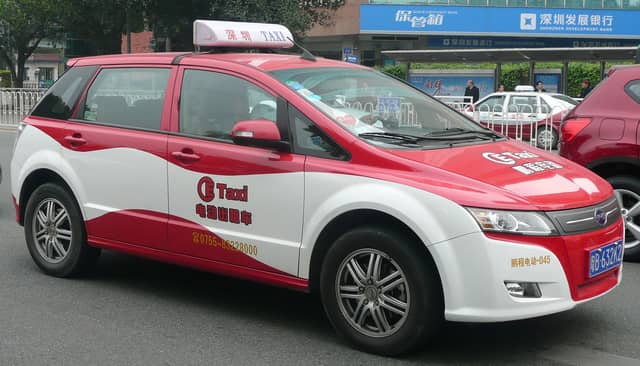
Not all the European car manufacturers are in favour of tariffs. They know they could hurt them as well as help them if China were to retaliate by imposing its own tariffs. Already, BMW’s iX3 electric SUV is built at Dadong and exported to Europe. The company also intends to import a number of Chinese-made Minis.
Both models would be subject to tariffs. Tesla would also be affected as it builds cars in Shanghai for export to Europe.
Although some major European manufacturers have invested in production in China in recent years, in partnerships with local manufacturers, some of them still export high-value models to Chinese markets. Volkswagen, BMW and Mercedes have also made it clear they are not in favour of the tariffs and Carlos Tavares, head of Stellantis, described them as, “a major trap for countries who go down that path.”
There are some who think the European decision to impose tariffs could be good news for the UK by boosting further investment in the UK, according to consultancy firm Gartner. Jonathan Davenport, Gartner senior director analyst, said that SAIC’s investment in its MG research and development centre in Longbridge, alongside the development of 150 MG dealerships highlights an established success story for Chinese investment in the UK.
Multiple brands from China like BYD, GWM Ora and Omoda have already partnered with UK dealers to establish franchised dealer locations including here, in the South West.
UK automotive dealers will be hoping for clarification from the government as soon as possible but this is unlikely before the election on July 4th. Davenport also said Geely had also created a joint venture with Renault to build low-emission petrol, diesel and hybrid engines and established its headquarters in the UK. Davenport said the UK is an increasingly important market for the Chinese. It is the second most important for Chinese automakers after Russia.
The new government will be pressurised to help the British motor industry meet its targets for the sale of electric vehicles and they may see the introduction of cheaper Chinese vehicles will help more motorists make the decision to embrace an electric future. Added to this they may see new Chinese investment providing more jobs to boost the UK economy.