

Peter Moore: Who’s rogue, the investors or the minister?

It is not a good idea to insult anyone who is offering to make a huge investment in your country. This is especially important when you could be right.
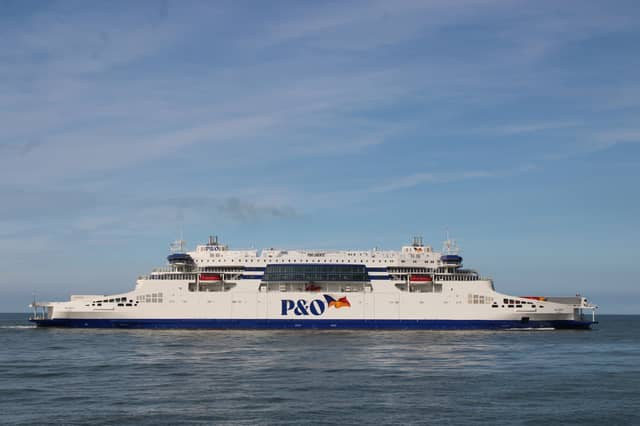
Louise Haigh, the transport secretary, called P&O Ferries a “rogue operator”. This was a reference to their decision in 2022 to sack all their UK staff and bring in cheaper staff from overseas. Of course, P&O Ferries are a completely separate company from P & O Cruises.
The problem now is that the owners of P&O Ferries are planning a £1 billion deal to expand the London Gateway container port.
How much we should listen to our moral compass when making economic decisions? Projects which help the economy and encourage growth will help pay for the NHS, education and all the other services we need but should investment be devoid of any moral consequences? It is a fine balance.
This conundrum is not new. I suspect that when caveman Ugg agreed to swap a mammoth tooth for a flint axe he did not consider whether the mammoth was killed humanely.
The original P&O shipping line became a major company following policies which were a bit dubious ethically. The East India Company was trading with China but there was one problem. To buy their tea and silk the Chinese wanted valuables such as silver. The Company came up with an innovative business plan. Because Bengal was also under British Rule and was an excellent place for growing opium poppies why not get the Chinese addicted and then we can trade cheap opium rather than expensive silver?
By 1839 there were an estimated twelve million opium addicts in China. In 1858 P&O alone shipped 642,000 chests of opium from India, despite stiff competition. The profits from the opium trade were ploughed into the tea trade. The great British tea habit was built on selling opium.
When the Chinese tried to ban the trade the British responded by attacking the coast and inflicted a humiliating defeat on the Chinese. Hong Kong then became British for the next 100 years and the East India Company continued to make large profits.
Clearly the move to ban slavery throughout the British empire in 1834 was the right decision morally but it did have economic consequences. Tobago was in the British Empire and a major producer of sugar using slave labour. Unfortunately, not every country banned slavery. As Cuba and Brazil continued to use slave labour Tobago could no longer compete. The islanders faced economic disaster. They began planting limes, coconuts and cocoa but their produce ended up being exported through Trinidad. Tobago was annexed to Trinidad in 1889 and formally merged in 1899.
Before we pat our ancestors on the back for abolishing slavery throughout the Empire the economy of Manchester was heavily dependent on the cotton mills. The cotton was imported from America which used slave labour. Stopping cotton grown by slaves would have devastated the North West of England.
The argument between profits and ethics continues. Tobacco companies own many of the companies producing vapes. They know that their product is highly addictive. Vapes are now in schools and the companies are making large profits. Having seen a fall in the sales of cigarettes they have found other ways to get young people addicted.
The richest woman in the UK, Denise Coates CBE, founded the betting company Bet365. Betting in the UK made £14.1 billion in the year to March 2022 and yet it is estimated that 1.4 million people in the UK are at risk of developing a gambling addiction.
We cannot improve the NHS, education and all the other vital services without turning the economy round to stimulate growth which means helping UK companies to make a profit. This may mean trading with some dubious companies but when should we say no?
Maybe our economy needs P&O’s thirty pieces of silver.