

Peter Moore: Politicians and booze - a sobering thought

Day Minister asked red-robe Cardinal for a dance
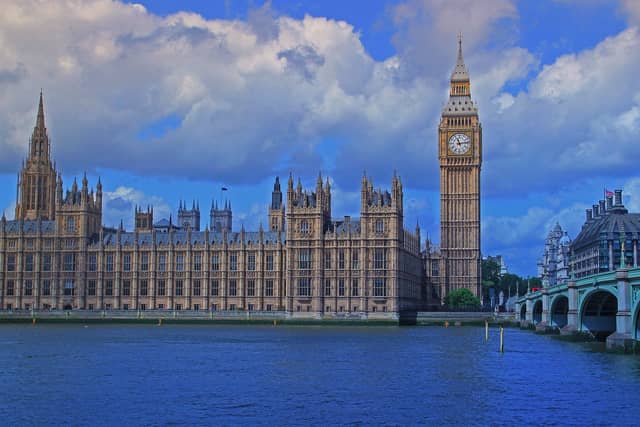
Recently the Green MP Hannah Spencer complained about the drinking culture in Westminster. Some MPs vote after drinking in the subsidised bars.
This does not sound impressive. In most jobs we would be in trouble if caught drinking at work. I avoided any alcohol when on call. One colleague faced a complaint. He smelt of alcohol on a home visit. When asked whether he appeared drunk the person complaining said, “no, he wasn’t drunk but should not have had any alcohol”. Maybe they had a point.
Medicine has a long history of drinking. There was a culture at medical schools of heavy drinking and, for some doctors, this carried on after qualifying.
I learnt an important lesson in my first hospital job. I had a great night in the doctor’s mess forgetting the consultant’s ward round was at 8 am the next day. As a student I could have missed the morning lecture but I was no longer a student. I struggled on with a bad hangover. I heard later my consultant spoke to the registrar, my immediate boss.
“Was there a do in the doctor’s mess last night?”
“Yes”
“Was Peter there?”
“Yes”.
“Oh dear. I was a bit hard on him”.
Later in the day the consultant came up to me and said, “Are you OK now? I gather you had a bit of a ‘virus’ this morning”.
It was enough for me to learn not to drink the day before an early start.
We were not the first generation of doctors to like a drink, In 1860 one Police Surgeon in London was dismissed when he was found to be drunk on duty 26 times. I am not sure how he got away with it the first 25 times. If I had been drunk on duty once I would have been dismissed and probably faced the General Medical Council.
Today the drinking culture at medical school is far less, probably because over half are women. The “lads’ culture” has gone.
But over the centuries politicians have been even worse.
The ancient Persians decided important matters by discussing them when drunk and again when sober. If the verdict was the same both times the policy was adopted.
As we approach the 250th anniversary of the founding of the United States it is unlikely that any American celebrating will beat the founding fathers. After they signed the Declaration of Independence they got through 54 bottles of Madeira, 60 bottles of Claret, 7 large bowls of punch, 22 bottles of porter ale, 12 bottles of beer, 8 bottles of hard cider and 8 bottles of whisky. I am not sure that the founding fathers would have agreed with the Americans who introduced prohibition in the twentieth century.
Politicians on this side of the Atlantic were no better. William Pitt the younger, when he was Prime Minister in the early nineteenth century was so drunk that he vomited behind the speaker’s chair during a crucial debate.
When William Wilberforce had his religious conversion, he dramatically cut his alcohol consumption right down to six glasses of wine a day. This was still not quite the fourteen units recommended by the NHS.
We do not have to go back two hundred years to find politicians with alcohol problems. Winston Churchill was rarely sober. When he was hit by a car in New York the doctor advised unlimited alcohol, not something I ever recommended.
George Brown was Harold Wilson’s deputy in the 1960s. When he was foreign secretary he was invited to the Brazilian Embassy. He saw someone in, what appeared to be an attractive red dress and asked for a dance. The answer was no. “First of all, you’re, drunk, secondly you should be standing to attention as this is the Brazilian National Anthem and, finally, I am the Cardinal of San Paulo”.
In the TV comedy “Yes Minister” an alcoholic minister was arrested for drink driving. He had to resign and, as Sir Humprey put it “as he was as drunk as a Lord they will probably make him one.”.
W S Gilbert suggested that if MPs had “a brain and cerebellum too, they have to leave that brain outside and vote just as their leader tells ‘em to”. Perhaps MP should remain sober even if voting “just as their leaders tell ‘em to”.