

Peter Moore: Guido's scheming becomes top of the plots
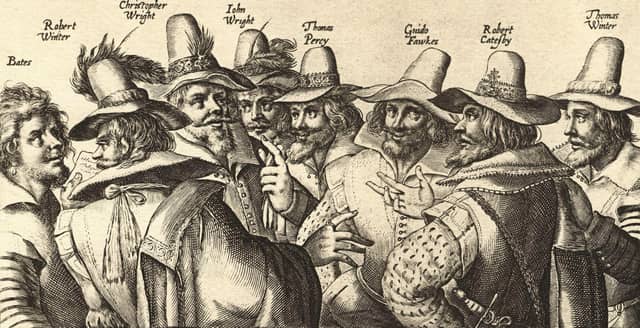

It’s that time of year again, gunpowder, treason and plot. As a child I remember the excitement, the bonfire, the guy and the fireworks followed by hot dogs. A great evening, especially the few nights when it didn’t rain.
Today Halloween has taken over with spooky things in shops from September. Apart from pointing out the inaccuracies in the anatomy of the skeletons (yes, I am that boring) is Halloween a better autumn celebration than Guy Fawkes? Afterall he was not even called Guy but Guido although a penny for the Guido does not have the same ring to it as a penny for the Guy.
Looking back, what were we doing? As a child I never really thought about the gunpowder plot but, in hindsight, were we really burning an effigy of a catholic after a failed coup four hundred years ago? Today Guy Fawkes would definitely have a case under the European Convention of Human Rights. He was tortured which is defined as cruel, inhuman and degrading treatment. Even if Robert Jenrick did get his way and the UK left the European Convention on Human Rights I do not think he would support the treatment meted out to Guido.
To celebrate the thwarting of the plot Londoners were encouraged to light bonfires but “without any danger or disorder”. Can anyone imagine disorder on our streets today? At least they were not football hooligans. Association football as we know it was not invented until the nineteenth century. In 1409 King Henry IV imposed a fine of twenty shillings on mayors who allowed football “and other misdemeanours” in their town. Torbay’s civic mayor, Hannah Stevens, will have to be careful when Torquay United plays.
Bonfires were not enough. After the failed gunpowder plot an Act of Parliament was passed designating the 5th of November as a day of thanksgiving. It was not repealed until 1859. Although I am unsure about celebrating by burning a catholic, the idea of a bank holiday between August and December sounds like a good idea.
At the time there were strong religious pressures. The King, James had come to the English thrown when Elizabeth died in 1603. The protestant Queen Elizabeth had spent her life threatened by Catholics, including the catholic mother of James, Mary Queen of Scots. It is hardly surprising than the protestant King James was a little paranoid. It was not until 1829 that the Catholic Emancipation Act was passed allowing Catholics to vote, hold public office and sit in parliament. Jacob Rees Mogg may look as though he is from the eighteenth century but if he really was, he would not have been allowed to become an MP.
Clearly the memory of Guy Fawkes has lasted a long time. I met a man on holiday who told me that an elderly relative wanted a word. There was a family secret which must be kept quiet. As he was the oldest of his generation she would confide in him. “It was one our ancestors who rowed Guy Fawkes across the Thames”. That might have put them in danger in the seventeenth century but is probably ok now.
Halloween has a much longer history going back to Celtic pre-Christian times. In the 8th century the Pope decided to make 1st November All Saints Day and so the night before was “All Hallows Eve” or Halloween. The mass immigration of the Scots and Irish into the United States in the 19th century turned the more obscure celebration into the major event it is in the US today.
The huge increase in the importance of Halloween in the UK, eclipsing November 5th, is imported from America. It is a bit like baseball. The first reference to baseball is in “A little pretty pocket-book” in 1744 by the Englishman, John Newbury but baseball is now far more popular in the US
I suspect that future generations will only celebrate Halloween. Guy Fawkes will be returned to history. I will no longer be around, but I might come back on Halloween and haunt Torbay Weekly. My column will then be ghost written.