

Paul Harding: Radio is as relevant as ever
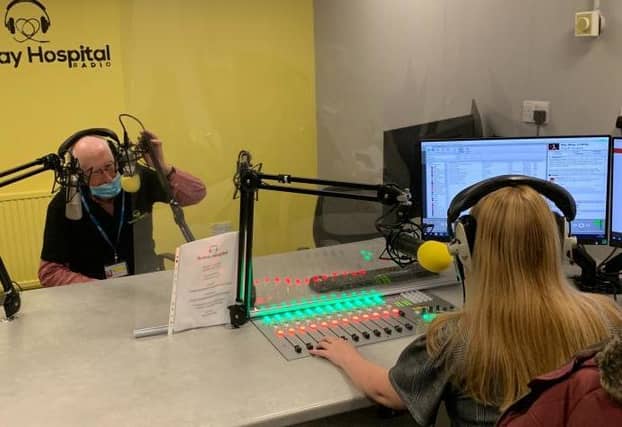

Paul Harding, Torbay Hospital Radio presenter: When Guglielmo Marconi, the Italian inventor, proved the feasibility of radio communication in 1895, he probably never imagined what would happen in the following 128 years. By 1899, the first wireless sign
Paul Harding, Torbay Hospital Radio presenter:
When Guglielmo Marconi, the Italian inventor, proved the feasibility of radio communication in 1895, he probably never imagined what would happen in the following 128 years.
By 1899, the first wireless signal was sent across the English Channel and, two years later, received the letter 'S', when it was telegraphed from England to Newfoundland. Nowadays I can tune into a radio station in Canada if I wish.
It was not until 1922, when the British Broadcasting Company launched Britain's first national radio broadcasting service.
Here at Torbay Hospital Radio, it is primarily a music station and radio allowed all sorts of music from all around the world to be brought to the masses, bringing different styles like opera and bluegrass to people that had never even imagined such things let alone heard it.
During World War Two, the BBC reinvented itself and public perception of the institution changed dramatically.
It more than doubled in size, overseas language services expanded and at home BBC Radio revamped to deliver the Home Service and the Forces Programme.
In those days, output evolved reflecting listeners' needs and set the tone for future programming in news, drama, entertainment and education. The BBC spoke to the nation and was it the conduit for dialogue among and with listeners as never before.
In 1944, George Orwell wrote that the words: "I heard it on the BBC" and it had a new meaning - "I know it must be true."
With the advent of the internet, the BBC still holds a privileged place in our daily lives and is still most peoples preferred source for the news of the day.
Radio enjoys a huge following in the United Kingdom. There are around 600 licensed radio stations in the country using FM and AM. But there are also more than 2,000 free internet radio stations streaming live online right now. So competition has never been fiercer.
It will not surprise you to know that Britain’s most-listened station is Radio 2, with around 15.3million listeners tuning in each week.
Hospital radio looks to reach patients in the hospital in the first instance and has no aspirations to hit millions, but we are always looking to become more accessible and that is why we broadcast online, stream to your smart speaker and for those around the hospital, we can be found on 95.9FM.
There are more than 200 hospital radio stations in the UK, and lots more around the world.
Each March, the Hospital Broadcasting Association hosts The National Awards, highlighting the stations and presenters - and once again presenters from Torbay are in the running for awards so watch this space in the months to come.