

Paignton sea defences ‘need a bigger wall’


'We not only want a great looking scheme but also one that holds back the sea through to 2065 and beyond'
A new sea wall planned for Paignton and Preston as part of a multi-million-pound revamp may not be big enough to hold back the rising sea, activists have warned.
The long-discussed proposals are reaching their final stages and are due to come before Torbay council’s planning committee soon.
A group called Action for Paignton backs the plans, which it says improve on the ‘Berlin Wall’ originally proposed several years ago.
But the group claims rising sea levels caused by changes in the climate mean the proposed wall will only hold back tides for the next 10 years, and will need to be higher after that.
The aim of the project is to rejuvenate the seafronts and make changes to public areas, traffic and parking while at the same time protecting the waterfront and low-lying parts of the town.
Storms often cause waves to break over the prom and the green, causing flooding issues and damaging buildings and shelters.
An original plan by the council for a long concrete wall along the seafronts prompted angry protests. The council went back to the drawing board and came back with the current scheme,
Funding of £4.6 million has been secured from the Environment Agency, with compulsory contributions from local developers and the government’s Future High Streets Fund also contributing.
“We support the latest proposal in principle,” said Richard Kaskow of Action for Paignton. “It is a significant improvement on the solution which the council endeavoured to push through three years ago.”
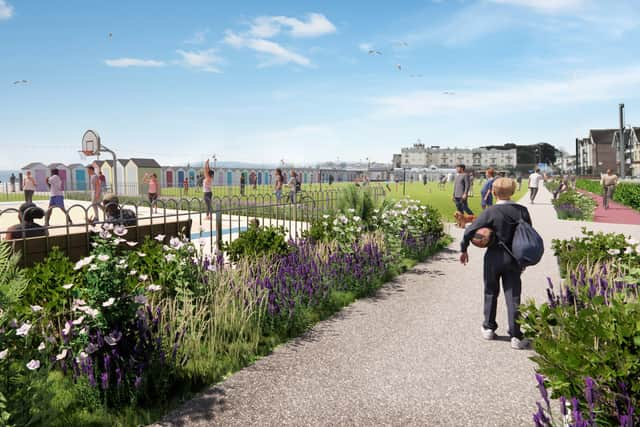
Action for Paignton also wants the ‘tired’ existing sea wall at Paignton to be rebuilt.

The group is also concerned about an area of rocks exposed by storms on the beach near the Vue Cinema building. The rocks which have come loose were part of the ‘armour’ of the original sea wall.
“We very much hope the council will address these issues,” said Mr Kaskow. “We not only want a great looking scheme but also one that holds back the sea through to 2065 and beyond.”