

Okehampton’s Ghostly Mayor: The Dark Legend of Benjamin Geare

A disgraced mayor, accusations of theft, a ghost trapped beneath Dartmoor and a black horse vanishing into Cranmere Pool — the legend of Benjamin Geare remains one of Devon’s most chilling pieces of folklore.
A couple of weeks ago, it was the anniversary of the death of a gentleman by the
name of Benjamin Geare, who died on 22 nd May back in 1701, at the tragically young
age of 54, but, like all good characters out of Dartmoor folklore, their story doesn’t
end with their death...
Benjamin became a prominent figure in 17th century Devon. He was well liked and
trusted, for he was elected to the post of Mayor of Okehampton no less than five
times. He served four terms, but before he could take up the fifth, he sadly died...and
it is the various versions of how he died that bring us into the realms of folklore...
This is why I love my job, researching the stories, finding the truth behind them, and
making the fact and the fiction merge together, to give myself, as a storyteller, the
best version with which to entertain audiences.
Having lived his whole life in Okehampton, everyone knew him, and, having worked
his way up from humble beginnings, he had become rich enough to own his own
fleet of merchant ships. With his wealth, had come power, which he used wisely, and
it’s for this reason that he was trusted, enough to gain him so many terms as mayor.
One of the most important roles, that this position gave him, was to hold the purse
strings, to what was known as a sailor’s ransom fund. This was gathered together, by
many towns throughout the country, from merchants who had a vested interest in the
crews of their ships, for it became a frighteningly regular occurrence for laden ships
to be boarded by notorious Corsair pirates, the cargo stolen, and the crew held for
ransom. This is where the fund came in, to pay said ransom, for if it wasn’t, they
would be killed or sold into slavery. Being a merchant, with ships of his own,
Benjamin was well aware of how important the fund was, so he was always using his
influence, to keep the mayoral coffers full.
Then, one day, in 1700, one of Benjamin’s own ships got attacked, and,
unfortunately for him, it was the one holding the largest part of his wealth. Without
delay, the fund was put to good use, and the crew were rescued, but sadly his wealth
wasn’t, leaving him bankrupt, and virtually destitute. Determined not to give up on his
way of life, he turned to all his rich contacts, who he had managed to get to donate to
the ransom fund, and begged them for help, but none of them were keen to get
involved in his own personal affairs.
In an act of desperation, Benjamin turned his attention to what was left of the fund,
stealing it for his own use, building himself a new ship, and crewing it with local
sailors. He saw his theft as a loan, intending to replenish the coffers, plus interest,
once his own situation had been restored. Sadly, as luck would have it, his second
ship was also raided by pirates, and the crew, once again held for ransom. The
townsfolk turned to Benjamin, to help bail out their relatives, but of course the coffers
were bare, and without any payment, the pirates had no use for the crew, so they
just killed them...
The blame was put squarely on Benjamin, and rightly so. Becoming shunned, and
despised by his community, his health suffered, and in 1701 he died, with no one
grieving his passing.
The version that many folklore stories tell, about the circumstances surrounding his
death, varies, but the events that took place afterwards are virtually the same...
In folklore, it suggests that behind the respectable facade, lurked a much more
criminal mind, that wasn’t just able to play fast and loose with public funds, but also
turned its hand to a spot of sheep stealing, when the opportunity arose. It was for
this crime, that he was eventually brought to justice, and, as this was seen as a far
more serious offence, to a rural community, than stealing money, he suffered the full
force of the law, and was sentenced to death by hanging.
His execution took place at a remote spot, on the north moor, aptly known as
Hangingstone Hill, not far from Cranmere Pool. Why so remote? Well, it was felt that,
as Benjamin was so attached to the town in life, his spirit might want to still make its
presence felt in death, especially around those responsible for his demise, so the
distance might deter him...sadly, they were wrong...
The rest of his story happened in reality, and is recorded in folklore...believe what
you will...
Benjamin’s spirit returned to the only home he’d ever known, and soon began to
torment the locals, not maliciously, he just didn’t know any better. Eventually, a local
priest was called upon, to put his soul to rest, and, once again, the idea of
remoteness was used, banishing him to Cranmere Pool, and cursing him to spend all
eternity trying to empty out all the water with a sieve. An impossible task, similar to
others, that well known sinners were often punished with in local folklore (think Lady
Howard from Tavistock, nightly picking a blade of grass from the lawn outside
Okehampton Castle, and William de Tracey, from Bovey Tracey, attempting to spin
rope out of sand). Initially, Benjamin’s efforts came to naught, but then his knowledge
of sheep kicked in, and he was able to shear the carcass of a handy dead one,
removing its fleece, and using it to line the bottom of his sieve. This enabled him to
empty Cranmere, in double quick time, which is why the pool has remained empty
ever since (or until now at least).
Unfortunately, for the good people of Okehampton, completing his task, not only
meant that Benjamin was now free to return to make a nuisance of himself, but that
return was preceded by the torrent of water that he had removed, sending it
cascading over the moors, into the rivers, East and West Okement, which both flow
through the town centre, causing massive flooding. Once it was ascertained that this
new pestilence was, again, the work of the newly freed, Geare's ghost, the townsfolk,
once again, turned to the clergy for help. This time, the Archbishop of Exeter, no
less, was sent, for he had a very specific way of dealing with the problem that
Benjamin proved to be. He summoned a local stable boy, to bring him a swift black
colt, and used incantations to also summon the wayward spirit. Having both parties
in front of him, the Archbishop used further incantations to entrap the ghost inside
the horse, and instructed the lad to ride it, as fast as he could, back to Cranmere,
and allow the colt to dive into its now empty depths. The boy did as instructed,
jumping off the horse, at the last minute, and watched, as it dived into the hollow,
where it disappeared, taking the spirit of Benjamin Geare with it. Returning to the
town, he reported the success of his mission, much to the relief of the assembled
townsfolk, who were never troubled by their ex mayor again!
However, he does still make his presence felt, if you make a late night visit to
Cranmere Pool. Sometimes, by the light of a full moon, and with the wind in the right
direction, you can hear his cries of frustration, emanating from the hollow, where he
is now incarcerated...oh, and keep an eye out for the stray black pony, that seems to
like hanging out there...
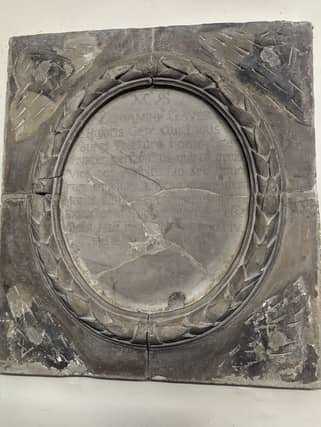
When he “died”, Benjamin Geare was buried at All Saints Church, high above the
town. Sadly, thanks to a fire that destroyed the main body of the church, back in the
1800s, we are unable to pinpoint his final resting place, but his memorial plaque, in
Latin, telling of his track record as mayor, was rescued, and is now on display in the
vestry, and it is one of the things that we go to see, with special permission, as part
of my Okehampton Ghost Walks. I’m planning on hosting some more this Summer,
so, if you fancy finding out what other spooky secrets the church, and the town, have
to offer up, why not come and join me? Readers of my work are always most
welcome! Look out for further details, and how to book in advance, when I release
the advertising, shortly.