

Number of Torbay fly-tipping incidents soars
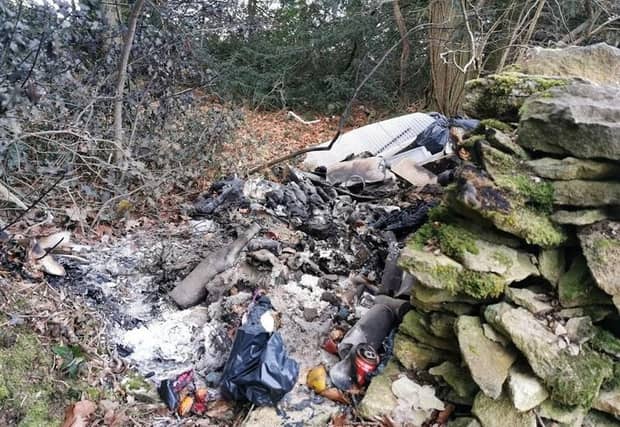

The number of fly-tipping incidents in Torbay has soared in the past year, latest figures have revealed. According to the latest figures released by the Department for Environment, Food and Rural Affairs (DEFRA), across England there was a four per cent
The number of fly-tipping incidents in Torbay has soared in the past year, latest figures have revealed.
According to the latest figures released by the Department for Environment, Food and Rural Affairs (DEFRA), across England there was a four per cent decrease in the number of fly-tipping incidents reported in 2021/22. For the South West, there were 49,883 incidents - a decrease of 10.5 per cent - for this period.
But Torbay saw a 22 per cent increase in the number of reported fly-tipping incidents.
Many areas across Devon also saw a marked increase in the number of reported incidents, with Torridge District Council seeing a 38 per cent increase, East Devon District Council six per cent and North Devon District Council two per cent.
The Country Land and Business Association (CLA) says farmers and private landowners are paying the price of this increasing crime.
The CLA South West - which represents the interest of farmers, landowners and rural businesses across Devon, Cornwall, Somerset, Dorset, Gloucestershire and Wiltshire - says the figure is probably even higher as incidents of fly-tipping on private land are not included in the official figures, yet this is where an increasing amount of waste is being dumped.
CLA president Mark Tufnell welcomed the progress but says the figures do not reflect the full scale of the problem.
He said: “We’re pleased to see, following years of campaigning by the CLA, that progress is being made in the fight against fly-tipping - including increased penalty fines which have led to an overall decrease in incidences.
“Yet despite the overall decrease in incidences, these figures fail to reflect the full scale of the crime, as increasing reports of fly-tipping on private rural land are not included. Two-thirds of all farmers and landowners have at some stage been a victim.
“But hundreds of thousands of offences on private land are going unrecorded, as farmers often have so little faith in the ability of the police or council to deal with fly-tipping that they simply bear the cost of removing rubbish themselves.
“It’s not just the odd piece of litter blotting the landscape, but tonnes of household and commercial waste which can often be hazardous - even including asbestos and chemicals - risking the safety of people and animals. This often requires costly expert treatment to remove.
“The UK Government’s promises to clamp down on fly-tipping on private land are yet to yield serious results. It seems that criminals simply do not fear prosecution.
“Ministers should look urgently at increasing the penalties for convicted fly-tippers, and properly resource rural police forces to ensure they are held to account. Without more progress, landowners, not the criminals, will continue to pay the price.”
The CLA introduced a five-point action plan to tackle fly-tipping, calling on local authorities, the Environment Agency and police forces to commit to stronger action against the increase of fly-tipping on private land and remove the landowners’ liability to remove waste dumped on their property.
The CLA also believe that each local authority should have a dedicated lead for fly-tipping to aid partnership working.