

MP Anthony Mangnall: Communities holding South West Water to account
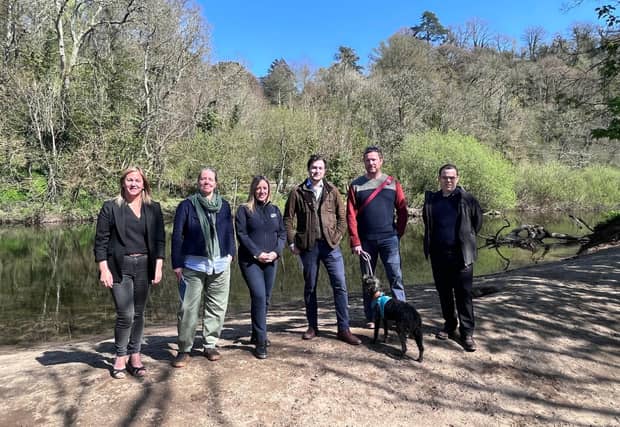

In the last few months, I have been pushing South West Water to engage with local communities. In late March, I held a town hall meeting in Brixham for residents to come and discuss their concerns with our local water provider. Today, I shall be doing th
In the last few months, I have been pushing South West Water to engage with local communities.
In late March, I held a town hall meeting in Brixham for residents to come and discuss their concerns with our local water provider. Today, I shall be doing the same in Totnes.
The purpose of these meetings is to hold South West Water to account, offering residents the opportunity to raise their points of interest and to learn more about what is and is not happening.
It is clear that a great deal more needs to be done and that water companies across the country have lost the confidence of residents.
The problems for water companies are many. The existing Victorian-era network is groaning under the increase in population and local developments, while the added intensity of rainfall in short periods is flooding the infrastructure and leading to sewage spills along our waterways and on our coastline.
Clearly, if the Government’s ambitions to improve biodiversity and reduce pollution are to be met, then more needs to be done.
South West Water has delivered on its promise to install Event Duration Monitors on 100 per cent of storm overflows. This is to be welcomed as it adds a new layer of transparency and ensures that residents and organisations can access real-time data.
Through their recently launched WaterFit Live map, we can now track the monitoring data, which is updated every two minutes, making it the fastest and most accurate water quality site in the country.
While websites are welcome and improved monitoring is to be commended, it does not diminish the need to reduce the primary problem at hand. Namely, storm overflow systems are not able to deal with increased levels of pressure and are in desperate need of improvement so that we can reduce sewage spills.
Far from being muted on this issue, the Government has now passed some of the most stringent rules of any country in the world to spur action.
From prohibiting dividend payments if performance is poor to being able to send the chief executive and directors of water companies to jail for inaction and increasing the level of fines that can be levied on them, there is no shortage of measures to ensure that the systems are improved.
These have all been introduced to focus the minds of water companies and to ensure that action is taken.
The problem rests with storm overflows which, as the name suggests, are designed as a release mechanism to prevent sewage from backing up into houses. However, with more pressure on the system and heavy rainfall, storm overflows are increasingly being used.
To address this problem, the Drainage and Wastewater Management Plan of South West Water needs to be published as soon as possible and it must detail what steps are going to be taken to increase the capacity of storm overflows so they do not spill.
On top of this, we must attempt to change some habits. For years, Government has attempted to encourage a change of behaviour around wet wipes. These calls have been unheeded which is why plastic wet wipes have recently been banned.
This will undoubtedly help, but we can take large steps to reduce the stresses and strains on existing infrastructure such as encouraging improvements to infrastructure before development takes place.
Fortunately, the Levelling Up Bill is set to mandate enhanced cooperation between developers and water companies. But it is also important that we play our part, and with a hosepipe ban upon us, the use of water storage becomes all the more important.
Water stored can relieve the pressure on our system as well as help reduce, even in a small way, the pressure placed on our existing infrastructure.
South West Water must do better. We have the chance to work collaboratively with them and at pace. If we do so then we can improve our water quality, enhance our biodiversity and achieve designated bathing water status in local areas.