

Motoring with Peter Vosper: Car tax to be charged on electric cars

In the government’s Autumn Statement, Jeremy Hunt announced that from April 2025 electric vehicles will no longer be exempt from car tax. This is seen as a clear message that government revenues from drivers will need to be recovered and the incentive fo
In the government’s Autumn Statement, Jeremy Hunt announced that from April 2025 electric vehicles will no longer be exempt from car tax.
This is seen as a clear message that government revenues from drivers will need to be recovered and the incentive for the early adopters will end on that date.
Furthermore, with many electric cars costing over £40,000, they will also be required to pay the £355 expensive car supplement on top of the current £165 currently charged for non-electric cars costing below that amount.
The Chancellor stated this would be a fairer situation and did not feel it would affect the level of sales but it is likely further penalties, particularly in the cost of running a diesel vehicle will continue to drive buyers into electric vehicles.
He is also obviously confident that the infrastructure will be massively improved by then allowing more and faster charging to be available.
The government has also recognised the strain on the lowest paid by increasing the minimum wage to £10.42 per hour from April 2023.
This increase is equivalent to 9.7 per cent and is much closer to the living wage but will have an effect on prices of many things including motoring costs.
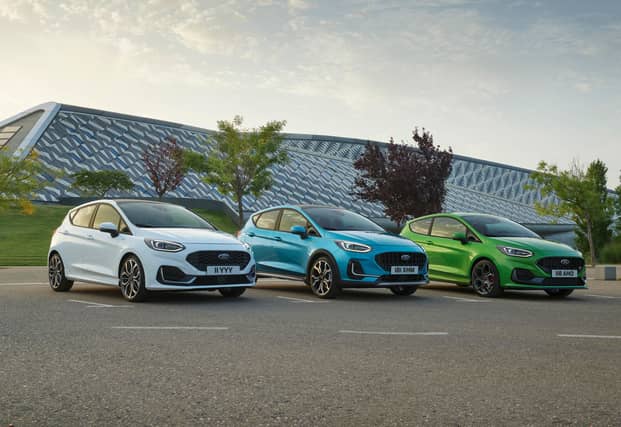
It is already evident that those motorists who feel they are able to downsize are doing so and following Ford’s announcement that the Fiesta will no longer be produced from July, there has been a rush of orders.
Fiesta has been one of Ford’s most successful cars, topping the sales charts for many years prior to the Covid outbreak, and like many of their fellow manufacturers, Ford have found the cost of adapting small cars to electric is not proportional.
This explains to some degree why the majority of new electric vehicles produced and sold in Europe have been at the top end of the price scale where the incentives encouraged early adopters and business users.
Over the next two years there will be more electric vehicles coming to market and new entrants from China are already presenting small electric cars at competitive prices.
As we approach 2023 with hopes of an increase in the new car sales market, supplies are still limited and manufacturers are taking the opportunity to update their factory production to accommodate the additional new electric models.
The used car market is still strong, albeit less so than in the first half of the year, and it will take time for the younger product to return in required numbers as a result of the downturn in production and sales over the past three years.
Fuel costs appear to be more stable than for some time and many buyers are considering the comparison between remaining with a mild hybrid or a plug-in in the hope that electricity costs will fall in the future.
The uncertainty of the Ukraine situation remains and although we all hope for an early resolution there is no sign of that at the moment.
Look out for some marketing activity in January as retailers ensure they keep full order books through as much of 2023, in the hope the economy improves in the build-up to the election.