

Misses Hamblin's 10,000 historic images are one of Torquay Museum's prized collections
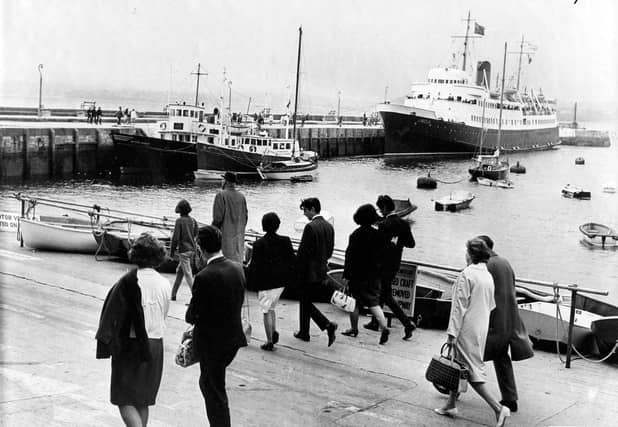

By Veronika ValigurskΡ, Torquay Museum Among Torquay Museum’s huge archive of more than 70,000 images is a core collection relating not only to Torbay but to large areas of Devon including the South Hams. The collection was made by the Misses Edith and
By Veronika ValigurskΡ, Torquay Museum
Among Torquay Museum’s huge archive of more than 70,000 images is a core collection relating not only to Torbay but to large areas of Devon including the South Hams.
The collection was made by the Misses Edith and Eleanor Hamblin, who became chairman and secretary of the pictorial records section of Torquay Natural History Society in 1952.
They were still collecting and adding to the archive in 1969 and their work was described then as one of the most valuable, in historical terms, assets of the society.
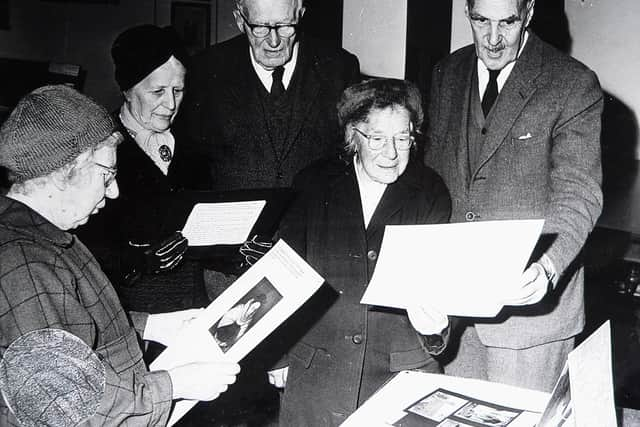
The collection is a mixture of photographs and prints including very old lithographs of local views and buildings. It is incredibly extensive covering literally hundreds of towns, villages and areas of Devon from Barnstable in the north to Plymouth in the south.
There is an extensive collection relating to Exeter as well as portraits of local and nationally important people and even images of local geology.
The Misses Hamblin added to their collecting by taking original photographs, we believe they went out on their bikes to take pictures of churches, interesting buildings and monuments. They certainly photographed a lot of old church fonts!
They then supplemented the images with detailed descriptions and pieces of local history. Although these are not always completely accurate, what they achieved was remarkable in the days before Google.
They put their collection into alphabetical order and created a card index so that it could be searched long before the days of databases and the internet.
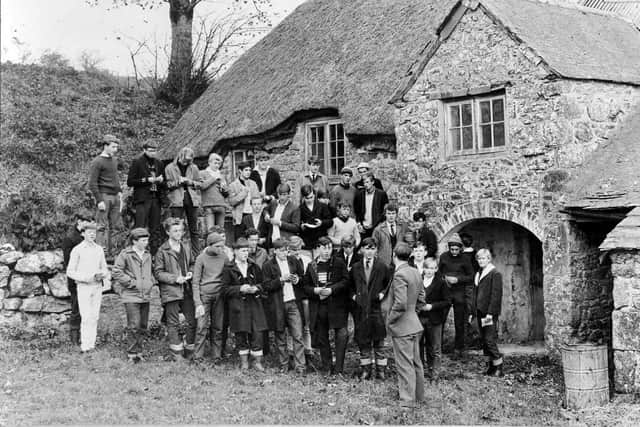
Images of Torbay were digitised in the early 2000s but because the museum’s database couldn’t handle large images and small PCs had only limited capacity, they were scanned as thumbnails.
This is why one of our collections volunteers has now been given the task to digitise images of Torbay again so they can be used on the museum’s social media and one day in a public online database.
She has also been transcribing the detailed descriptions and adding keywords to each image record. This is a huge task and we are not sure how long it will take us to complete it. And even when we process all photographs of Torbay, we will be left with all the prints and images of other parts of Devon that may only be seen by visiting researchers.
Follow our progress on the museum’s social media channels where you’ll be able to see some of the scanned photographs as part of our #DigitalArchives feature.