

Shaldon Wildlife Trust celebrates rare birth of Red-Ruffed Lemur quadruplets
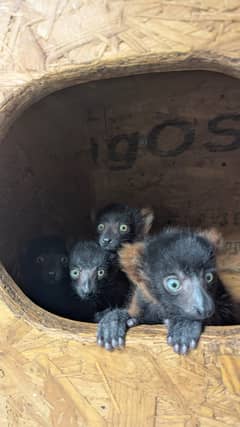

Shaldon Wildlife Trust is celebrating an exceptional conservation milestone after the birth of rare red-ruffed lemur quadruplets, a phenomenon occurring in fewer than 6% of cases, marking a major boost for the critically endangered species and the European breeding programme.
Shaldon Wildlife Trust is celebrating an extraordinary conservation success after the birth of four critically endangered red-ruffed lemur infants in a single litter – an exceptionally rare event for the species.
The quadruplets were born on May 4th to parents Eka and Nero, marking a significant milestone for both the Devon-based wildlife charity and the wider European breeding programme working to protect the species.
While twins are relatively common in red-ruffed lemurs, quadruplet births occur in fewer than 6% of cases worldwide, making the arrival at Shaldon Wildlife Trust a remarkable and rare achievement.
The infants are part of the European Association of Zoos and Aquariums (EAZA) coordinated breeding programme, which plays a crucial role in safeguarding genetically healthy populations of species at risk of extinction. Red-ruffed lemurs are native only to a small region in north-eastern Madagascar, where their populations continue to face pressure from habitat loss and environmental change.
In addition to its involvement in the breeding programme, Shaldon Wildlife Trust also supports conservation work in the wild through its field partner, the Lemur Conservation Association (AEECL), contributing directly to efforts to protect the species in its natural habitat.
The news follows recent recognition for the Trust in National Geographic, which highlighted its work among leading conservation-focused zoos worldwide, further strengthening its reputation on the global stage.
The four newborn lemurs are reported to be healthy and thriving under the care of their mother, Eka, who is now navigating the demands of raising an unusually large litter. Visitors may be able to catch glimpses of the youngsters as they grow more active in their enclosure in the coming weeks.
Zak Showell, Director of Shaldon Wildlife Trust, said the birth was a proud moment for the team.
“To have four healthy infants at once is a real testament to the care our team provides,” he said. “We’ve had a lot of excitement recently with the National Geographic coverage, but there is nothing quite like the arrival of ‘quads’ to remind us why we do what we do. It’s a huge win for the species and a proud moment for Shaldon.”
The Trust says the birth represents not only a boost for its own breeding programme, but also a meaningful contribution to the long-term survival of one of Madagascar’s most threatened primates.