

LGBTQ+ History Month: Michelangelo Trail at Torquay Museum tells the story of queer history

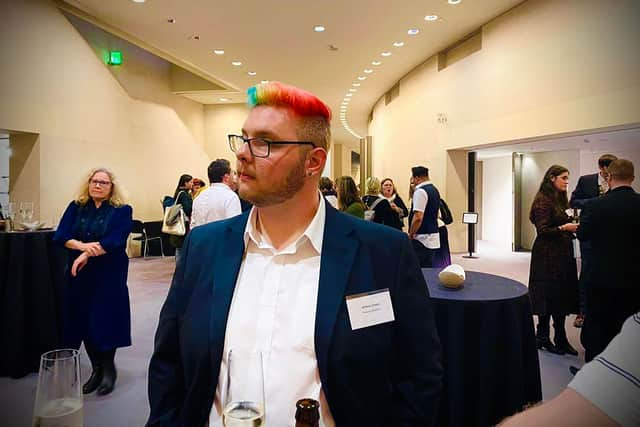
Will Emery, visitor services assistant at Torquay Museum: This LGBTQ+ History Month, Torquay Museum is celebrating its resident queer historian and his work as author of the museum’s award-winning Michelangelo Trail. Back in 2021, the museum embarked on
Will Emery, visitor services assistant at Torquay Museum:
This LGBTQ+ History Month, Torquay Museum is celebrating its resident queer historian and his work as author of the museum’s award-winning Michelangelo Trail.
Back in 2021, the museum embarked on a project to tell the hidden queer histories behind objects within its displays and collections. We wanted to bring in some new volunteers who had a keen understanding and unique perspective when it came to locating these ignored histories.
One such volunteer was me, a recently graduated history student who saw the social media post about the project and applied under the premise of being able share the stories of the queer community within intuitions that historically have not been so eager to discuss it.
Since the trail was completed, it has received international interest, with visitors from Germany, Australia and the US all coming to the museum with the express purpose of walking the trail and learning about the queer history behind the objects.
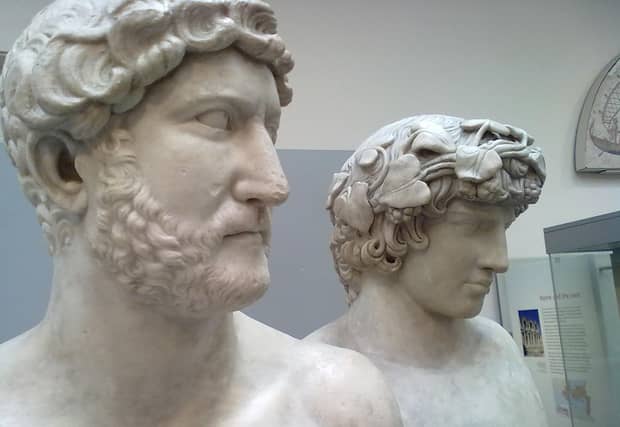
My favourite part of the trail is the Roman coin of Hadrian found at Ipplepen. Not just for the history but also for the kind of relationship Hadrian and Antinous shared as well as how it was accepted by others all those centuries ago.
Emperor Hadrian married a woman but was known to have engaged in multiple same-sex relationships. These relationships were not uncommon in ancient Rome - men were free to choose sexual partners of any gender.
It’s true, sexual freedom was the standard in AD117 with the wider Roman public having the choice of partner with very little pushback from society.
In modern terms, Hadrian was likely bisexual. The most famous of his same-sex relationships was with Antinous.
Returning from his trip to Londinium with his entourage of men, many of whom he was intimate with, Hadrian met a Grecian man renowned for his beauty called Antinous.
Hadrian invited Antinous to join his tour of the Empire, an action coupled with his shameless public shows of adoration, made Hadrian stand out in a uniquely queer way from the other emperors of ancient Rome.
Seeing a Roman Emperor fall helmet over sandals for another man on his grand tour of the Empire is certainly a picturesque love story but was nonetheless the case here.
Their relationship lasted for eight years until the untimely demise of Antinous, who drowned in the river Nile.
Heartbroken, Hadrian mourned for Antinous publicly, rather than privately as was custom for Emperors.
Hadrian proceeded to flood the Roman Empire with imagery of Antinous, dedicating shrines and deifying him in the same fashion as the Roman Gods.
He also named the new Egyptian city Antinopolis in his honour, something Emperors only did when glorifying and memorialising the most important people in their lives.
This trail project was put forward to the Marsh Charitable Trust for consideration for their ‘regional volunteers in heritage’ award at the end of 2022, it was the joint winner for the South West region.
Celebrating these histories is incredibly important for not just queer people but for everyone and is the reason why we have a month to improve our understanding of the past in new ways.
Queer history has always been there, so let’s tell it together. Access the trail either in person by visiting the museum or online via the museum’s website.