

Leading trade unionist of 20th century retired to Brixham
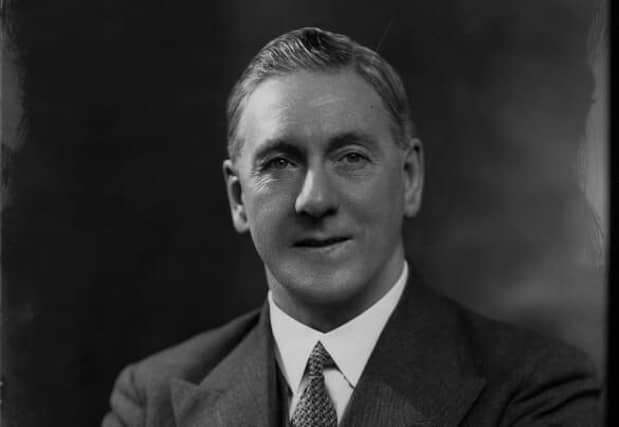

Significant people who lived with in Torbay in the 20th century, not always famous, by Ian Handford, president of Torbay Civic Society. This week, Lord Walter McLennan Citrine: Walter Citrine was born in August 1887 and having left school at age 12, rose
Significant people who lived with in Torbay in the 20th century, not always famous, by Ian Handford, president of Torbay Civic Society. This week, Lord Walter McLennan Citrine:
Walter Citrine was born in August 1887 and having left school at age 12, rose to be a union baron and then baron in his own right before finally retiring to Brixham.
Walter was the third child of Alfred and Isabella and early on chose to be educated at home before, like his father before him, he went to sea.
However, as a prolific reader, he concentrated on economics, shorthand, accountancy and finally futuristic textbooks on electricity.
Having absented himself from school and gone to sea, he soon found he hated being a mere cabin boy and therefore took a first real job in a Liverpool flour mill as an apprentice to some electrical contractors, eventually joining their union in 1911.
Within three years he had been elected Mersey District Secretary of the Electrical Trades Union (ETU) and then emerged as its Assistant General Secretary.
He married Dorothy Slade, of Manchester, in 1914 and they produced two sons, Norman and Ronald, although it was Norman that, having become a successful writer and solicitor, published 'Trade Union Law' in 1950.
But with the death of his father in 1983, his earliest years in unionism taught Norman about the laws and how it might bring about collectives and eventually bring 'collective bargaining' for its members.
In 1920, Walter became a full-time District Secretary of the ETU before eventually becoming Assistant General Secretary of Manchester ETU. Now a Baron of Trade Unionism and fully grounded in its, law he also learned the power numbers generated. Having become Assistant General Secretary of the TUC at Congress in 1924 when the death of its Secretary, Fred Bramble, occurred, he was recalled from touring Russia and quickly appointed Acting General Secretary of the TUC.
This occurred in April 1926 when one-way traffic was closing Whitehall due to critical talks taking place between the Government and TUC at No 10.
When the Daily Mail 'setters' finally refused to print a headline 'For King and Country', Prime Minister Baldwin, Winston Churchill and Neville Chamberlain accused them organisation of 'gross interference with the freedom of the press' in the vain hope the strike would end.
Eventually, a state of emergency finally brought this first official General Strike of history to an end on May 5, 1926.
Sir Walter was the tool of reason who changed the TUC on realising that support for strikes can crumble. Future disputes brought greater resolve but in October 1926, striking miners had drifted back to the pits ending their unofficial strike.
Citrine now spent 20 years as General Secretary before appointed to the National Coal Board in 1946 with responsibility for education, training and the welfare of workers.
Meanwhile, the Communist Party had imposed a 'communist solar system' and as President of the International Federation of Trade Unions from 1928 to 1945, Citrine even accused Moscow of exerting unfair influence to disrupt UK workers.
Then, in 1935, Ramsay MacDonald offered him a peerage, which was declined until he realised he could be the person to make the union movement strong enough - all governments had to consult.
In supporting Churchill's call for re-armament, he was offered a place in Sir Winston's Government in 1940 but once again declined although accepted appointment to the Privy Council.
Then, in 1947, the Central Electricity Authority made him chairman, a role held until 1957, before remaining a part-time member of its council. Those early years studying electricity paid off and later he confirmed these were his most creative years.
Seen as fair minded with considerable charm, his Lordship could play the cornet, sing and was a lover of opera and palmistry. Having lost his wife in 1973, he retired to Torbay and Gorse Cottage on Berry Head, Brixham, residing there until his death at age 95 on January 22, 1983.
A feature is available when sending two first class stamps and a small stamped addressed envelope to Torbay Civic Society, Suite 4, 1 Palace Avenue Paignton TQ3 3HA
IAN'S COMMENT: An amazing academic whose law is still alive today.
Next week: Gwendoline M Berryman.