

Kevin Dixon: Torquay's tunnels attract deep fascination but often inspire dubious legend
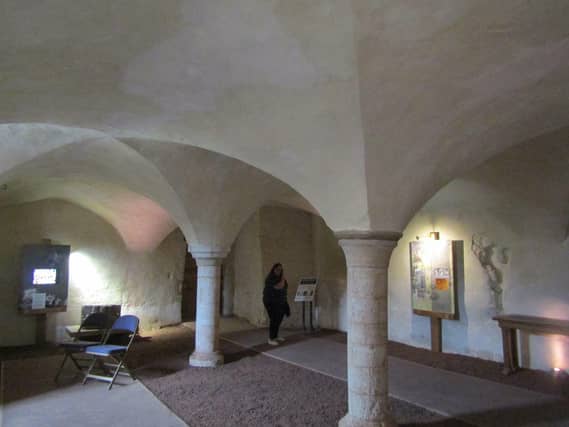

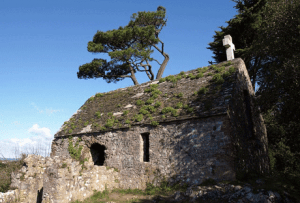
Is there a secret tunnel connecting Torre Abbey and the enigmatic St Michael’s Chapel?
That’s the Torquay legend that has been around for decades or even centuries. But is it true?
The obvious first question concerns the real logistical problems of digging a tunnel over half a mile long under Avenue Road, and then a vertical shaft through the centre of a limestone outcrop; for no discernible reason. From any standpoint, it’s unlikely the tunnel exists and there is no evidence for one.
But maybe the existence of the tunnel isn’t as important as to why people thought that it might really be there.
Tunnels absolutely do exist. They facilitate stealthy travel, escape, or movement of people and goods. A few buildings even have secret passageways built into the original plans, designed perhaps to enable the inhabitants to escape from an attack.
Yet, fanciful tales about extensive tunnels and secret passages seem to turn up in almost every village, town and city. It could be that there is an irresistible tendency to project mystery onto the subterranean, a mythology just wating to unfold in the dark. Inevitably, Freud and Jung join in the speculation with their psychological interpretations of the meanings of tunnels.
Even if we know exactly what a tunnel is for, the stories keep coming. In Exeter, for instance, medieval tunnels were built to house the pipes that brought fresh water to the city. Despite knowing their origin and use, these underground passages still generate tales of ghosts, buried treasure, and secret escape routes.
We’re a storytelling species and subterranean themes in literature go back a long way, easily transferring to local legends. From the twelfth century ‘Mabinogion’, and the fourteenth century ‘Sir Gawain and the Green Knight’, to Jules Verne’s ‘A Journey to the Centre of the Earth’, to John Meade Faulkner’s ‘Moonfleet’, Kenneth Graham’s ‘The Wind in the Willows’, Enid Blyton’s ‘Five’, and right up to the present day with JK Rowling’s ‘Harry Potter’. All feature the mysterious underground.
Gothic tales often featured tunnels and then 1890s detective novels about ‘impossible crimes’ became popular. Later horror movies would take up the trope. These outrages were often carried out using secret passages, promoting the idea that old buildings held secret spaces.
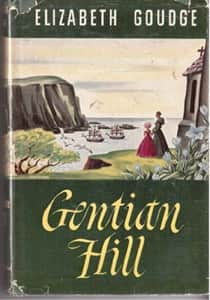
Closer to home, in 1949 Elizabeth Goudge based her Torquay-set novel ‘Gentian Hill’ on a Victorian legend and made use of the tunnel myth in her narrative.
Worth noting is just how common folk traditions about tunnels in religious buildings are. They include Easby Abbey; Granchester Manor in Cambridge; Newbury’s St Nicolas Church; Necton in East Anglia; Kirkstall Abbey in Leeds; Newlaithes Hall in Newlay; St Edwards in Staffordshire; the Grange at Beckett Park; Leicester Abbey; Wincanton’s Stavordale Priory; and many more. Perhaps the most striking parallel to our own legend is the tunnel that is said to run between Glastonbury Abbey and the Tor.
At Furness Abbey, the tunnel hides both the Holy Grail and King John's missing jewels. Unhappily, Torre Abbey has no such hidden treasures.
What they appear to have in common is the Reformation and the suppression of the Catholic Church. It was in 1539 that the white-robed canons of Torre Abbey surrendered to Henry VIII’s commissioner at the Dissolution of the Monasteries. From then on Catholic priests used hidden rooms called priest holes to escape Protestant persecution, the Old Religion being metaphorically forced underground and, in the case of priest-holes, by necessity hidden away from view.
Moreover, we have the legend of Torre Abbey’s most famous ghost. In 1588 the Armada vessel Nuestra Senora del Rosario was captured. 397 prisoners were briefly held at the Abbey in an impromptu jail which subsequently became known as the Spanish Barn.
By the late nineteenth century, the spurious tragedy of the Spanish Lady had been transformed into Gothic melodrama and somewhat embellished. In the book ‘Tales of Torquay’ there was a Catholic priest who “resided in the ruined Abbey” and who was “permitted to administer the last rites, but her troubled spirit found no rest… it is still to be seen drifting slowly and rather wearily through the Abbey park towards the Spanish Barn”.
The presence of an active Catholic priest seems very unlikely in staunchly Protestant Elizabethan Torbay, though other narratives do have priests in hiding below ground.
After the Reformation, a number of monastic sites were purchased by Catholic families, as was Torre Abbey by former recusants the Carys. There may then have been a legacy of local mistrust of Catholics and a suspicion that ‘Romish’ activities were continuing ‘beneath’, despite the outward respectability of the family.
Across the world, folk beliefs have held that underground spaces are inhabited and the setting for unholy practices. Devon’s caves, tunnels and mines have long been associated with subterranean species and their hellish overlord; Daddyhole, the Devil’s Cave, being one example. These hypogeal locations were traditionally populated by small humanoid creatures known as pixies, their actual existence taken seriously until at least the mid-nineteenth century.
According to local legend, Kent’s Cavern supposedly had caves so extensive that they ended in Kent. Hence the name. In a local rhyme, we are told of a dog lost in the tunnels of the Cavern. When finally emerging on the other side of the country, he has lost all his fur to the grasping hands of malicious pixies:
“And he went
And he went
Until he come out
In the county of Kent”.
It is, however, more likely that the name originates in the Celtic ‘canto’ meaning ‘border’ or ‘coastal’. Accordingly, in Devon we have Kenn and Kenton, while the County of Kent and Canterbury have the same source.
There was also a Victorian belief that the god Mithras was worshipped in the pitch-dark of Kent’s Cavern. What a third-century Roman mystery religion was doing in Wellswood is likewise a mystery without supporting evidence.
The other possible cause of local interest in hidden tunnels is the link to smuggling. Smugglers avoided the excise man by making use of drains, sewers or water supply conduits. In a few cases, smugglers did construct tunnels but only over short distances. Many villages on the south coast consequently have a local legend of a smugglers’ tunnel.
Sadly Shaldon’s ‘Smugglers Tunnel’ isn’t actually a smugglers’ tunnel. A ruined limekiln at the entrance suggests the real reason that it was cut; to access limestone that had been shipped to Ness Cove. It also offered private beach access for Lord Clifford whose marine villa is now occupied by the Ness House Hotel.
So, it doesn’t appear that there is a tunnel beneath Chapel Hill. On the other hand, there nearly was. The original plan for the Newton Abbot to Torquay railway, which now cuts through the valley, called for a tunnel right through Chapel Hill.
But all this logic and rational explanation doesn’t end the romance and mythology. Perhaps, particularly when we’re young, we just want to convert humdrum reality into something a bit more exciting.
Recently observed at a Torbay church were tourists having their attention drawn to a small ancient door at the bottom of some steps. They were told it was the entrance to a secret tunnel, leading to a nearby manor house and used by Royalist soldiers to escape advancing Parliamentarians.
The door’s actual function was to give access to the electricity meter.