

Kevin Dixon: Do good dogs go to heaven?
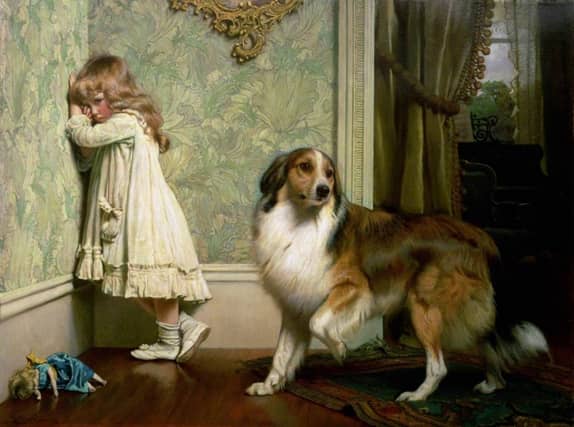

“The best friend man can possibly have”, Voltaire (1764)
Do good dogs go to Heaven?
Tucked away around the back of Torre Abbey is a pet cemetery. It’s a kind of place that’s less scary than Stephen King and more melancholy than Secret Garden, with ancient walls and locked doorways.
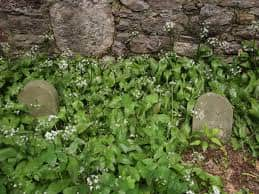
When the Abbey was owned by the Cary family, this is where they laid their much-loved pets to rest. The small headstones read: ‘Jack – the very best’; ‘Jack II – a dear old friend’; and ‘My Dolly – loving and loved’.

And hidden deep within Haldon Forest near Exeter is an unofficial and forgotten animal cemetery. Here is the last resting place of hundreds of pets, including dogs, cats, hamsters, horses and even, it is rumoured, a boa constrictor snake.
We know that societies have been burying animals since the Egyptians interred their mummified cats, but that was for religious reasons. Animal burials also took place in Roman society but then we just seemed to stop doing it. Medieval England didn’t bury its non-humans. The practice only seems to have become popular in the Victorian period.
While pet cemeteries were an established feature of German society, Britain’s first canine burial ground opened in 1881 in London’s Hyde Park. Before this, wealthy pet owners would erect monuments dedicated to their deceased pets in their own private gardens.

That there was a need for a proper burial place for animals indicates a shift in attitudes against the background of a rapidly changing industrial society.
Until the late-eighteenth century animals primarily had a working role and were expected to earn their keep or were there to be eaten. There were, of course, pet owners, though keeping non-productive animals was frowned upon. Satirical prints criticised the aristocracy and used pet ownership, particularly among women, as symbolic of wastefulness and decadence.
It was during the Victorian era that we begin to see real changes in human-pet relationships, indicated by discussions on animal welfare and the portrayal of animals in art and literature. By the mid-century, contemporary publications and handwritten diaries were referring to some categories of animals as companions or friends.
From the 1850s onwards self-help books on pet care were being published, pet food manufactured, and health remedies, such as cough pills for dogs, being marketed. During the later Victorian period, pets were further integrated into family life and upper-class households began to present their pets as being actual members of the family.
Growing affluence allowed many to take on non-productive new family members. Pedigree dog breeding became much more popular, the breeds moving far away from their original uses as guards and hunters. These were expensive pets which proclaimed their owner’s wealth and status.
But pet keeping was always more than mere conspicuous consumption. Even poor working-class families captured wild birds, hanging the cages outside their windows. Rabbit keeping was also encouraged, particularly for boys who built hutches and took on their care. Here we see the blurred lines between family pets, food sources, a way to learn about death, and training for future family and societal responsibilities.
An interest in animals wasn’t restricted to the familiar. For the wealthiest families, parrots and monkeys were popular, reflecting Britain's fascination with its colonies. The less advantaged wanting access to the exotic had circuses and travelling menageries, featuring hyenas, lions, tigers, and elephants. Carrying on that tradition up until the 1970s were Torquay’s photographers offering snaps taken with a parrot or monkey.
Not all animals were held in the same esteem, however. Note that Torquay’s pet cemeteries seem exclusively for dogs. While people did keep cats and no doubt felt a real fondness for them, they were seen as utility animals, vermin-killing workers rather than a companions. The long association with witchcraft may also have lingered and many feared cats, seeing them as devious nuisances.
Most cats were semi-feral and accordingly depicted in Victorian art far less than dogs and clearly regarded with little warmth. In 1859 Torquay-visitor Charles Darwin, for instance, disparagingly described their “nocturnal rambling habits”. Though there were exceptions, as noted later, it was only in the twentieth century that cats really began to be seen as pets.
It was always dogs that were held in greatest affection. This high approval was influenced by the belief that the creation and maintenance of the right kind of society began in the home and with the correct raising of children. Advice manuals recommend pet keeping to build character, a caring nature, and personal responsibility. Specifically, dogs embodied loyalty, courage and a willingness to defend the home. Their ownership therefore began to be seen, particularly for boys, as training for a role in industry, Church, and Empire.
Hence, the elevation of dogs from utilities to companions and ultimately to membership of the family.
But all family members must pass on. In Victorian Christianity, heaven was thought to be like a nicer version of life on earth, with the ideal celestial structure still being the family; as below, so above. Accordingly, some pet owners assumed that their dogs would be granted the same privilege of paradise as humans.
We then see a growing number of references to owners and pets being reunited after death, in much the same way that humans referred to a deceased spouse, sibling, or parent.
Demonstrating this afterlife optimism, there were pet funerary services, rites for animals, and epitaphs printed in newspapers. Some families would even organise a full funeral that could include choirs, processions, black-garbed mourners, offers of condolences, and the sharing of anecdotes of the departed beast.
Some, on the other hand, saw any belief in an animal afterlife as offensive. For example, an 1880s Edinburgh woman organised a full funeral procession and cemetery burial for her cat. An outraged crowd dug up the deceased feline and smashed its grave.
Though pets were not viewed as being on the same level as humans, and so given separate cemeteries, there remained an equivalence in their burials. Note the reference to sleep on the Cockington headstone.
People perceived death as sleep-like throughout the Victorian and Edwardian periods and so animal graves began to include a bed-like kerbstone and a headstone. ‘Rest in Peace’ or ‘Here lies’ were common engravings, as they were for their owners.
Of course, it was only affluent families that could afford to have their pets buried with elaborate headstones or pay high inhumation fees. Hence, only around one per cent of all pets ended up in the cemeteries. Indeed, most of society saw pet funerals as just another peculiar practice of the rich.
The majority of grieving pet owners disposed of their deceased animals in any way they could. Some did seek public expressions of their heartache and loss, and dedicated pet cemeteries opened around Britain. The rest buried their loved companions at home in back gardens, marked with makeshift wooden crosses. These fragile memorials quickly rotted and were lost.
It was only the discrete pet cemeteries, with their enduring gravestones, of families such as the Abbey’s Carys and Cockington’s Mallocks, that survive to remind us of past inter-species grief.