

Ian Handford: Torbay's action man who led daring raid on Zeebrugge to target U-boats
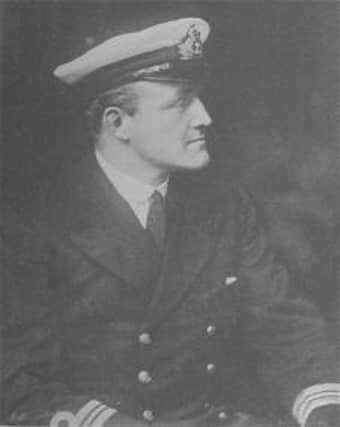

Born at Higher Erith Road Torquay on February 3rd 1886, Arthur Leyland Harrison was a son of Lieutenant Colonel A J Harrison of the Royal Fusiliers. Educated at Brockhurst Preparatory School Essex before a Naval cadet on the Battleship HMS Mars, he served with the Channel Squadron. Today Brocklehurst School and Dover College honour Arthur each Armistice Day when holding a remembrance service to him.
From a young age, it was clear Arthur was going to be a man of action, being good at most physical games and eventually capped twice for playing Rugby for England. He had even played while in the Navy and long after death was recognised as the only man to play Rugby International that held a VC (Victoria Cross) our highest award for gallantry.
After serving with the Channel Squadron, Arthur joined HMS Lion as the First World War started, yet for some unknown reason was immediately "lent" to the armoured Cruiser "Good Hope". He later rejoined HMS Lion and saw action at Heligoland Bight and Dogger Bank before being involved in the Battle of Jutland in 1916. Interestingly, at Jutland, he was serving alongside his younger brother Percy who like him would eventually be "mentioned in despatches".
During the War troops of Germany marched into Belgium and the Port of Zeebrugge. By 1917 the Allies were aware the port led to inland Bruges where 30 German U-boats and dozens of destroyers sought shelter from Allies attacks at sea. Our Government also knew that the German submarines especially targeted merchant ships delivering vital food supplies to Britain from our friends across the world. In the latter part of 1917/18 Cabinet Ministers were even told by their Naval chiefs that unless the U-boats were stopped or sunk, there was a likelihood Britain could be starved into surrendering.
Plans were immediately drawn to find ways of attacking the German fleet including "Operation Hush" - an idea of blockading ports including Zeebrugge - all of which initially failed. Then enter Lt. Harrison who with a new idea wanted to land men at Zeebrugge which would be followed by two infantry companies of the 4th Battalion of the Royal Marine Light to eliminate the defence guns mounted on the "mole wall" protecting the entry point of the canal to Bruges. If successful they would then sink two ferries and block off the entrance/exit to the inland port.
Having been agreed it was on the night of 22nd/23rd April 1918 the cruiser HMS Vindictive under the Command of Harrison and now fitted with mortars, flamethrowers and howitzers steamed into Zeebrugge to attack the defenders on the mile-long wall sixteen feet above the ship. With a special deck fitted to allow the raiding party to get ashore, almost immediately Harrison was hit by a fragment of shell that broke his jaw and knocked him unconscious. Fortunately, he had survived and, within minutes, was conscious, quickly noting that the wall guns were not silent (being vital to the next part of the attack). He now gathered his men and led the second attack on the "mole wall" defenders and although being severely wounded and in pain, this also failed as now he and most of his men were killed.
Arthur Harrison's body would never be recovered but the VC citation for his action says "he displayed indomitable resolution and courage of the highest order". Though the goal was lost, later it would be reported that British vessels were scuttled at the port but still blocked it and by early May 1918 the German U-boats were once again negotiating the exit and entry to Bruges canal.
Today, in Torbay you can still view Commander Arthur Harrison's Memorial Stone sitting alone alongside the walkway on Roundham Head Park in Paignton, while at Wimbledon they mounted a Brass Plaque to honour him in the Warrior Chapel of St Mary's Wimbledon.