

Ian Handford: No blue plaque yet to a specific Cary

The stories behind Torbay's blue plaques by Ian Handford, chairman of Torbay Civic Society: Bearing in mind numerous branches of the Cary family are associated with our area back to Saxon times, it seems extraordinary their name can only be viewed on hea
The stories behind Torbay's blue plaques by Ian Handford, chairman of Torbay Civic Society:
Bearing in mind numerous branches of the Cary family are associated with our area back to Saxon times, it seems extraordinary their name can only be viewed on headstones, memorials, tombs and granite plaques of Cockington, Chelston and Torre Abbey plus Cary Green in St Marychurch and at the Cary Park in Torquay, as no blue plaque has yet been requested to honour any specific member of the family.
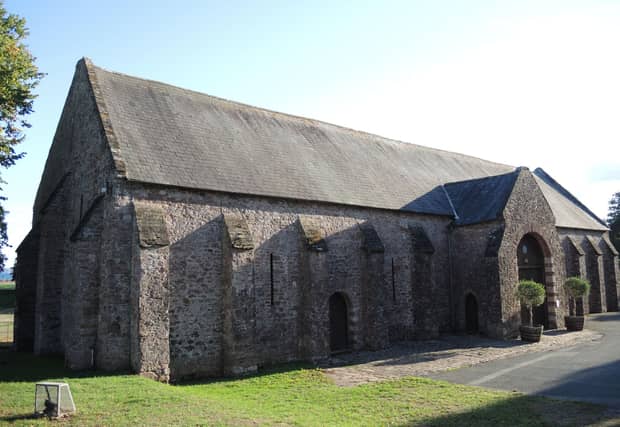
For centuries, this family have owned most of Torquay at one time or another which explains why we still see a Cary Road, Cary Park and its road, the Cary Green at Torquay and the family homes at Cockington Court and Torre Abbey with its Spanish Barn, all reminders of the Cary family.
The Cockington estate was purchased by Sir John Cary in 1375 until he formally opposed King Richard II in 1388 and forfeited the land when banished to Ireland.
Fortunately, the estates were eventually restored to the family as an early Robert Cary received the gratitude of King Henry VII after defeating a French knight in armed combat.
But during the War of the Roses, the land was again lost again until finally being restored after the Battle of Tewkesbury.
Then, in 1588, Queen Elizabeth I bestowed a knighthood on a George Cary in recognition of helping defend South Devon against the Spanish with supporter Sir Edward Seymour.
They jointly took 400 prisoners during the Spanish Armada and some residents today know the men were imprisoned in what we still call 'The Spanish Barn'. Torre Abbey estates were then purchased by the Cary family in 1662.
One arm of the Cary Roman Catholic side of the family became particularly prominent after Henry Cary's son Robert inherited at age 12.
Robert would have witnessed his mother and brother being trustees until he reached the age of majority in 1849. Then, at 21, he became responsible for starting most of Torquay and St Marychurch developments and with Brunel's railway having reached Torquay, the expansion included new properties at Abbey Road, Belgrave Road, Waldon Hill and in St Marychurch.
He was to be the most famous Cary ever associated with our area and even became a leading member of the Local Board which allowed him to create numerous public properties including a town hall, a musuem, the Breakwater at Babbacombe and Toll House at Torquay.
He was also Lord of the Manor of Cockington and Chelston while retaining land at St Marychurch.
Robert S S Cary died in September 1898, of cancer of the tongue.
It was to be his only surviving son, after the Great War, Colonel Lucius Falkland Brancaleone Cary that succeeded and he is recalled as we pass Lucius Street and Falkland Road.
But it was his second wife Louisa Isabel Sophia Rowley - Rowley Road, St Marychurch - that would become the most famous female Cary.
Having noted the hospital in Higher Union Street was too small by 1851 for a growing population, she vowed to devote her life to support the hospital and especially, poor children.
She was president of Torbay Hospital from 1904 to 1915 and having built on the site of 'Goldilia' in the Warberrys, she created 'Rosehill' the first children's hospital in honour of her own child, Henry.
Rosehill would accommodate just six children and Louisa spent five years in support of, and expanded, Higher Union Street Hospital with a new children's ward.
Today, her name is synonymous with children as we can note when visiting the Louisa Cary Ward on the Newton Road hospital sporting its children's 'nursery' tiles.
In 1930, the family had sold the land to the borough council for a mere £30,000 and, today, I say one family member at least deserves to be remembered by a blue plaque.
An article dedicated to Robert Shedden Sulyard Cary can be obtained by sending two second class stamps plus a stamped addressed envelope to Torbay Civic Society, Suite 1, 4 Palace Avenue, Paignton TQ3 3HA