

Ian Handford: Captain Scott's son and his continued legacy
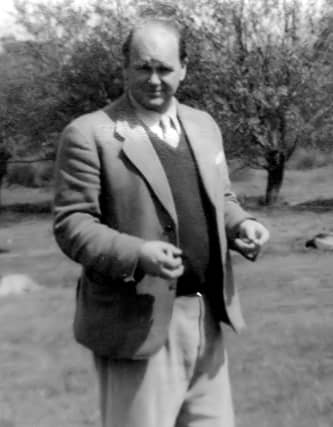

Having established The Severn Wildfowl Trust at Slimbridge Peter was a regular broadcaster on the BBC Children's programme "Nature Parliament".
He also constantly painted and eventually was commissioned to undertake portrait drawings of HRH Princesses Elizabeth and Margaret before the 1948 Olympics became another challenge when he offered the Chair of the Yachting Racing Union Olympic Committee to be based at Torquay.
With our Royal Yacht Association (RYA) situated at Beacon Quay, the adjacent "Marine Spa" was to be chosen as headquarters for the Olympic Games Committee. The actual Opening and closing ceremonies of all Torquay Sailing events were to be held on Torre Abbey Meadows. Ten thousand or more people were likely to attend. With fifty-nine countries being represented, it actually seemed odd that Peter, as Chairman of the Torquay Olympic events, should be allowed to compete. Peter did not win his race on the day, yet had he won, one wonders who might have given him his prize.
Meanwhile, in following his father's lead Peter would continually tour countries of the world for scientific research, including in 1951 going to Iceland to study the breeding grounds of the pink-footed geese and Northern Canada where he mapped an unknown area while still searching for the breeding grounds of the Ross geese. When home, he was far more concerned with protecting and saving breeds of any fowl threatened with extinction.
Sadly, his marriage to Elizabeth failed and he eventually remarried Felicity Phillips (Philippa), daughter of Commander Frederick William Talbot-Ponsonby of the Royal Navy. Their marriage was blessed with a daughter - Dafila and a son Richard Falcon Scoot - two years later.
Having received a CBE in 1953 he now helped found the new BBC Television Centre in Bristol where a new history unit was soon established with programmes like "Look", which Peter hosted for seventeen years. Many new nature programmes now followed which included Peter's researched work and like David Attenborough today, he became the accepted "natural narrator and presenter" of his era. When the Bristol Gliding Club relocated to the Cotswolds, it was virtually adjacent to Slimbridge and that led to another challenge, although Peter knew powered flight must come first.
Having started to fly, it would not be until June 1956 that he had his first solo gliding flight and became "instantly hooked". Yet first he was off to film on the Galapagos Islands and it would not be until his return in 1959 that he was able to purchase a top-of-the-range single-seat Olympia 419 sailplane. A year later he set a new record when gliding "fourteen miles short of the Diamond distance of 312 miles" qualifying before then winning the famous "Wakefield Trophy".
With two friends in 1961, Peter Scott founded the World Wildlife Fund (renamed the World Wide Fund for Nature) to raise money for nature conservation around the world. As Chairman he even designed the Panda logo, before inventing the red data books that today list all endangered species. He became involved with the International Union for the Conservation of Nature and Natural Resources (IUCN) and founded a Species Survival Commission. As its Chairman from 1962 to 1981, he still found time in 1963 to glide and "rise" and win the British Gliding Championships while serving as helmsman on "Sovereign" in the America Cup off Rhode Island.
Sir Peter's paintings, illustrations, photography, writing, journalism and media skills were always in demand and he said of his life "I am without question the luckiest and I believe, the happiest man I know" which says it all. Having been Knighted by his Queen in 1973 Sir Peter Scott suffered a heart attack and died in a Bristol hospital on August 29th 1989 - only two weeks before his eightieth birthday.