

Gardening with Pat Duke: There's always room for a tree in your garden

Many gardeners were eagerly waiting for November to come around in order to plant trees they’ve been gently nurturing until now. November is traditionally tree planting time. As long as the soil isn’t frozen or water logged, trees will love this colder s
Many gardeners were eagerly waiting for November to come around in order to plant trees they’ve been gently nurturing until now. November is traditionally tree planting time.
As long as the soil isn’t frozen or water logged, trees will love this colder spell with plenty of rain to develop a healthy root system and little bacteria around.
Planting a tree can only be a good thing. If there is a negative then it’s the choice of tree and its location which ultimately is down to us.
Planting a tree will give you years of pleasure, and at this time of year especially. It will be a self sustainable environment supporting a myriad of life forms from other plants and lichen to insects, birds and small mammals.
Whatever size garden you have, there is a tree that fits.
Always do your research and find out how big it will grow. You probably don’t want a monster that takes all the light away and covers the house in leaves every autumn.
Some trees will fit into a pot while others will grow over the house in a couple of years, sending deep roots into the foundations, so it’s sensible to take a bit of time choosing your tree.
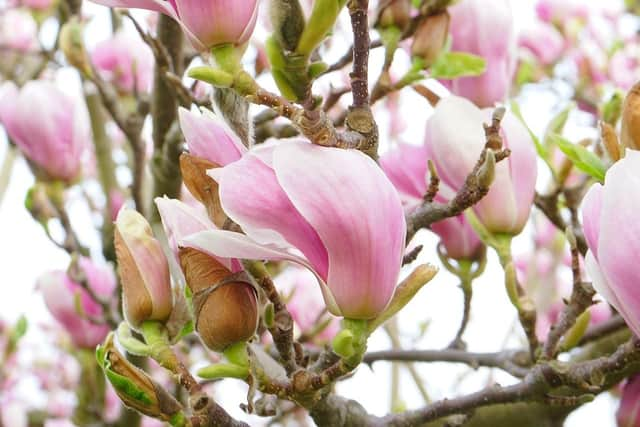
Smaller trees can include olive trees, some magnolias, acers and Japanese dogwood.
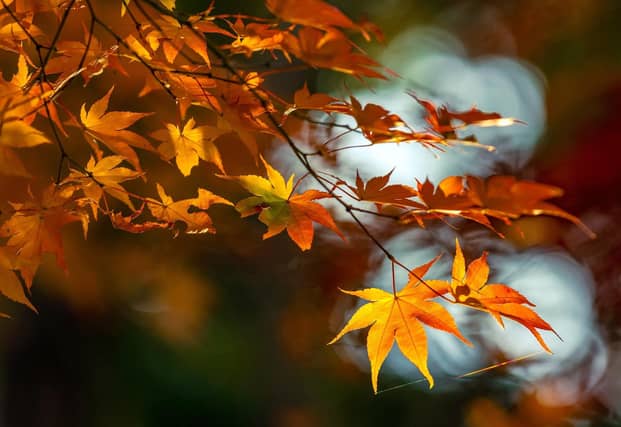
If you have a small garden, then an acer is often a good choice as it provides interest from March to October and is low maintenance.
Another tree in this bracket is the rhus typhina which keeps good shape and has feathery leaves that wouldn't look out of place in the tropics or on the set of Jurassic Park. They can also turn a deep burnished bronze colour.
They easily self seed which is either a good or bad thing depending on the space you have, your tolerance levels and who wants them as Christmas presents.
Even hawthorn is a tree that gives colour and berries as well as being the slowest wood to burn.
ON THE PLOT
If you have fruit trees on the plot they will need pruning now.
Remove any damaged, diseased branches and those crossing each other. I tend to remove half of the water shoots - vertical thin whips growing from the main arteries and trunk.
Any blackberries and raspberries need pruning by now as well.
Keep clearing the leaves off the lawn, aerating and scarifying as you go. Keep the leaves in a moist, dark place where they will break down and can be used as leaf mould to enhance compost.
Placing them in a bin bag while wet and puncturing holes in the side does the job. Going over them with the mower helps break them up which speeds up leaf mould production to just under a year.
Make sure any bare earth is covered with compost. You should by now have a ready supply of compost in your bin that can be put to use and dragged underground by the worms through winter.
Over the summer you can turn waste into compost in around 12 weeks but once you’ve emptied the bin/heap the process can start again now for the black gold to be conveniently ready by springtime.
This time of year where things aren’t growing gives us more time to prepare for next year and also take time out with a mug of tea to slow down and notice nature rather than staring into a screen.
There will be much more activity going on in the garden if you have a tree there.