

Gardening with Pat Duke: Signs of autumn have started to appear
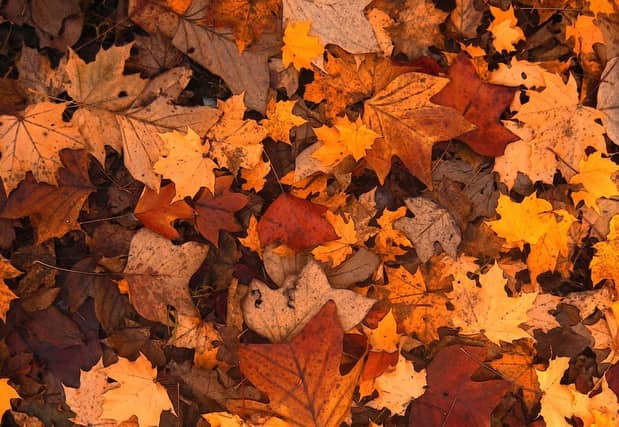

Autumn colour has started to appear in the trees somewhat randomly. There is a large pear tree in our garden that has patches of bright red and yellow but is mostly a healthy green. Trees use a green colour called chlorophyl to photosynthesise. This is
Autumn colour has started to appear in the trees somewhat randomly.
There is a large pear tree in our garden that has patches of bright red and yellow but is mostly a healthy green.
Trees use a green colour called chlorophyl to photosynthesise.
This is to ingeniously create sugars just from sunlight, water and chemicals in the soil.
These sugars are what give the tree energy. Pretty amazing, I always think.
Even more surprising is that they shut down in winter to keep as many nutrients as possible.
Therefore, the dominant colour (green) recedes like downloading a computer programme and the skeleton colours are left until it all starts again.
All this means dreaded leaf collection, and while I like to leave some on the beds for the bugs and worms, most of them need to be collected and turned into leaf mould.
Autumn signs are here.
When the leaves are all cleared away, you can get on with lifting or moving tender plants indoors.
An insulated greenhouse doubles up as a safe house in winter.
If you can’t move them, then they'll need to be wrapped in fleece.
This keeps tree ferns and banana plants snug until unwrapping in March/April.
Old school hessian and packing with straw is just as good and more satisfying.
Adding mulch to the roots of shrubs and trees will also help them get through the winter.
It's much better to do it now in temperate weather than panicking after seeing the forecast in December and rushing out there with an ice pick and duffel coat.
The trick with all this is finding the right time to undertake preventative tasks but you don’t want to leave it too late.
The signs are here. I peeked into the leaf mould container to be terrified by a large jumping frog, clearly not happy at being disturbed so early in his attempted hibernation.
If you want an alternative task, it’s time to plant winter pansies to flower in the coldest of months.
On the plot
Keep harvesting as much as you can.
In the South West, we can have at least a month longer than the frozen north so make the most of it while you can.
Any time now the dreaded first frost will streak across the veg patch like a Slytherin magic spell and anything tender will be no more.
Keep an eye out for the signs and act quickly.
It all sounds very dramatic but things like beans, celery, fennel and outdoor tomatoes have taken a lot of nurture, so don’t see that effort wasted.
Sow garlic this week by placing a single clove pointy end up, just under the surface about six inches/15cm apart.
Choose soft neck garlic for where we live as it will tolerate gentle frosts and is much easier to use, is fatter and grows better.
After the last harvests, you will be needing to clear the ground in preparation for spring.
If you’re using the no-dig method, clear last season's crop - pea and bean roots can be left in the soil - and cover with cardboard that has had tape removed and no ink if possible.
Once that’s done and it's not windy, place your chosen substrate on top such as compost, chipping or manure.
You can either leave it until spring or plant the next crop in rotation through the cardboard.
You might have small winter veg plants grown from earlier planting such as Brussel sprouts, spring onions or winter cabbages.
For some reason it's never easy to buy winter vegetables at this stage, so its always best to grow your own from seed for this purpose.
Try not to look in all those hiddey holes that animals and bugs hide in for a warmer winter sleep unless you want a shock like I had this morning.