

Gardening with Pat Duke: Last chance saloon for separating perennials

I'm not sure it's warm enough yet to sow the annual seeds that are burning a hole in my pocket but there has been a spluttering start to the spring sunshine. Having been away over Easter and returned to long grass and exploding blossom, it’s time to thin
I'm not sure it's warm enough yet to sow the annual seeds that are burning a hole in my pocket but there has been a spluttering start to the spring sunshine.
Having been away over Easter and returned to long grass and exploding blossom, it’s time to think about getting back in control and planning the borders.
It’s pretty much the last chance saloon for removing dead matter from perennials and separating them. Still add as much organic material as you can to make life easier for the plants and you.
Borders are generally made up of perennials, bulbs and annual flowers with the occasional shrub thrown in for good measure. It's this time of the month that summer bulbs can go in and these are cheap and very cheerful and available everywhere to offer height and colour throughout summer if water is available.
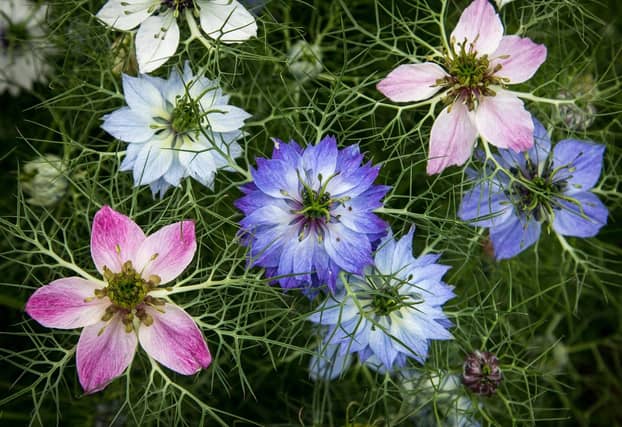
In between the bulbs you can sow annuals in the gaps directly in the ground. Some timeless examples of annuals for the border are nigella (love in a mist) which looks good as a clump and can come in pink and white as well as the customary azure blue. Other reliable favourites are cornflowers, godetia, viscara, and helichrysum (straw flower). All are perfect for dry flowers in winter.
For the front of the border, smaller annuals like limanthes (poached egg flower), candytuft, and marigolds or California poppies grab the attention. Even nasturtiums will thrive at the front and seem to be healthier the more they get neglected bizarrely.
Get some sunflowers on the go to encourage younger family members to take an interest and it's still not too late for sweet pea planting.
Sow the chosen annuals in groups, labelling them as you might love them so much you can't do without them next year. It will also help you when you come to weeding and you don’t dig the seedlings out which is a favourite pastime of mine.
ON THE PLOT
Don’t forget peas and beans, which you can plant several around a bamboo cane tripod. Some will be yours and some will be for the slugs and snails but at least you ll get some.
If you don’t want climbing beans, dwarf varieties are available but their crop tends to be less prolific.
Indoor sowing should still keep you active and kale, cauliflower, cabbage, celeriac, leeks and most soft-stemmed herbs can be grown to plant outside later in the summer. Sow fast-germinating radishes alongside to mark where everything is. Outdoor varieties of tomatoes, courgettes and cucumbers can be nurtured indoors and planted out in the warmth of May.
It's all coming together now for growing veg and getting your hands dirty is part of the joy.
What time you have can be spent planting seeds or transplanting seedlings into larger pots for risk-free planting outdoors.
If planting seeds isn’t your thing then you can drop in seedlings that are quite reasonable and bought in strips. This way if you’ve missed the window for planting indoors, you can catch up.
If you’re using the no dig method then it will also help you get two crops of some of the more resilient crops.
Keep mulching or weeding, whatever method you choose will help the plants thrive and provide more time for drinking tea and catching the rays of sun that spring is supposed to provide.
It’s a great time to have gratitude for being outside in nature watching what sings or moves around the garden.