

Gardening with Pat Duke: Cannas add a summer-long splash of exotic colour
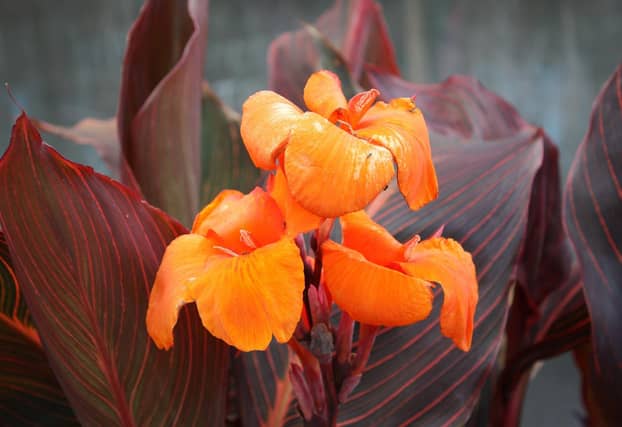

Even though it's May, I don’t think anyone has hung up their fleece thinking it’s ready for a coating of dust until October comes around. Now is that time of year where summer bulbs are going in pots and beds for a quick and colourful win in mid to late
Even though it's May, I don’t think anyone has hung up their fleece thinking it’s ready for a coating of dust until October comes around.
Now is that time of year where summer bulbs are going in pots and beds for a quick and colourful win in mid to late summer.
An often-forgotten rhizome is the canna which will flower throughout the summer until the frosts cloak it in chilly mist ensuring its annual demise.
Cannas are sub-tropical and exotic, making us think of long hot nights abroad and they can transport you there in your own garden if all the stars are aligned.
Due to their popularity they have been hybridised and it can be the devil's own job to choose a favourite. Anna Tropicana Black is persistent and well suited to our climate. Its almost black leaves - the clue is in the name - offer contrast between lipstick red, scrambled egg-shaped blooms that seem to last an age.
If orange is your thing then Canna Wyoming is just the job for a dramatic, attention-grabbing statement from the back of a mixed border. ‘Stuttgart' also has bright orange flowers but is underscored by green and white variegated foliage. Growing 3ft-4ft tall, it’s well placed in the middle of a flower bed.
They can often be confused with banana plants due to their similar leaves but cannas are a type of lily that will last three to six years. Some people, and it won’t be surprising to find that there are those types who obsess over this plant, only ever grow them for their striped leaves.
Fortunately, where we live they only need bringing in if there is a sustained frost so a few spades of mulch will see it tucked up in bed over winter.
When buying canna rhizomes, try and choose ones with as many as five eyes. Like a potato, each eye corresponded to a future flower. Point the eyes skywards when planting to give them an idea where the surface is.
They love to be kept moist but not too wet. I find a watering regime of small and often does the trick and scattering a few grass clippings on their feet will help with leaf production.
ON THE PLOT
Now the potatoes are pushing their shoulders above ground, they can be earthed up as soon as they are around 6ins high.
Pile soil around them until they are only just visible and keep this up until you have two deep banks around them. This helps them keep any potential frost out and also prompts them to grow more tubers which means more potatoes.
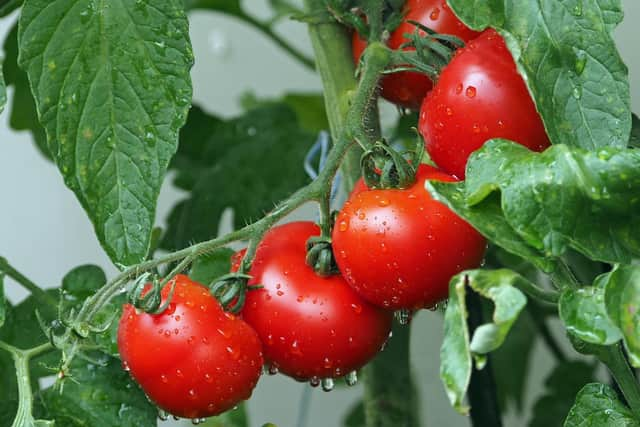
So many varieties can be bought or even grown outdoors so if you don’t have a greenhouse there still is no excuse. They are such fun to grow and the fruit they produce is nothing like the at times watery or cotton wool-flavoured varieties you can buy commercially.
Picking and eating your own tomatoes still warm from the sun is definitely a bucket list activity.
Plant them up to their first leaves as they can grow roots anywhere along their stems. They are hungry plants so once the fruit start to appear, feed them twice a week with a potash feed or one you've picked up while out shopping.
Taller varieties will need staking with a bamboo cane and tying in. There isn’t enough space here for all the methods of tomato growing but the important thing is to make a start so you can savour that first juicy red fruit.