

Famous Paignton street had royal connections
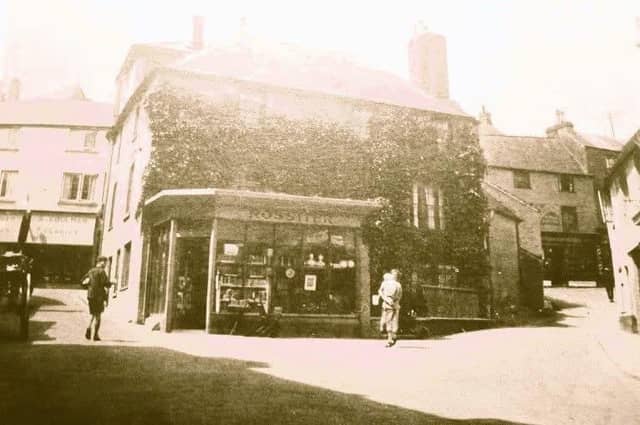

Lesley Drew of Paignton Heritage Society helps us remember the town's iconic Church Street... and reminds us that it had an illustrious past history
Church Street, one of the oldest streets in Paignton, formed part of the inland settlement of Paignton, whose roots go back to Saxon times.
Church Street today bears little resemblance to the bustling shopping street of the past. It has been a significant street for hundreds of years. William of Orange was believed to have stayed the night in Church Street after landing in Brixham in 1688. Following his stay, he made his way slowly to London, carefully noting the reception he received from the English people on the way. Was he here by invitation or was it an invasion? Either way, William and Mary were crowned King and Queen on April 11th, 1689; the Protestant faith was restored, and much of the power of the monarchy was ceded to parliament.
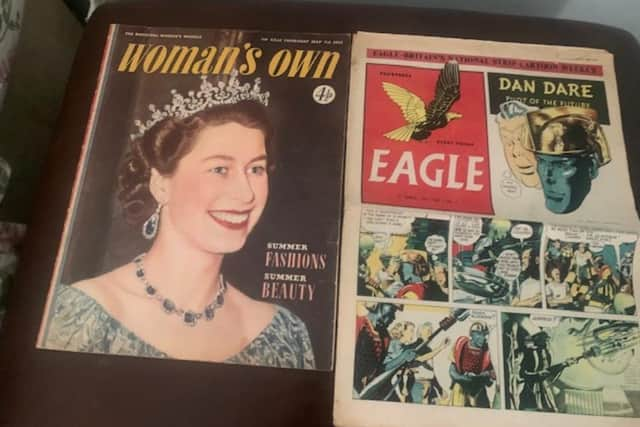
Above: comics
Let’s look at the more recent history of Church Street, which some readers may remember. Many of the shops are still standing but no longer trading. On the left side of the street, walking towards the church, was Mr Slater's shoe repairs. Further down was Alderton’s Newsagents, selling all the current newspapers and magazines together with stationary items. Some of the magazines are still around today, notably Woman and Woman’s Own. Others, particularly children’s comics Eagle, Tiger, and School Friend, are long gone.
On the other side at the junction with Winner Street was the fish and chip shop, which in the 50s probably just sold fish and chips, unlike today when the choice is much greater. There was also a greengrocer and the Post Office. Best of all from a child’s point of view, Minifees sweet shop. As more and more sweets became available, Minifees had them all. Most people smoked, so a wide range of cigarettes and pipe tobacco was also available. Close to November 5th, fireworks were on sale for as little as 1d each. For 3D, it was possible to buy a riprap, and for 6D, a huge rocket (or so it seemed). Next to Minifees on the corner of Crown and Anchor Way was the butcher, and on the other corner, a baker. The London Inn, now the Coach House, was a few yards from the bakers, and opposite was the Starkey Knight and Ford Public House, attached to their brewery.
All of the buildings mentioned above are still standing; however, it's worth remembering a couple that have gone. At the top of Church St, in the middle of the road, stood a small draper's shop owned by Miss Rossiter. Unfortunately, this was pulled down for road widening in the 60s, a sad loss of an interesting and historic building. Further down Church Street, next to Starkey Knight and Ford Public House, there were two shops. One had been a sweet shop but was closed in the 50s, and next to it was a haberdashery that was open, a long, narrow shop that stretched down towards the church. No trace of either remains.
Much more could be written about Church Street, the church itself, and the hospital, but that’s for another time.
Paignton Heritage Society holds meetings and talks on the third Thursday of the month at Gerston Chapel, Torquay Road, starting at 7pm. Our next talk on Feb 20th is by Kevin Dixon and is entitled Torbay in the Movies. Kevin’s talks are always interesting and well attended.
Entry is £5, and everyone is welcome.