

Ernest Brown: Freeman of Torquay's life of politics and religion
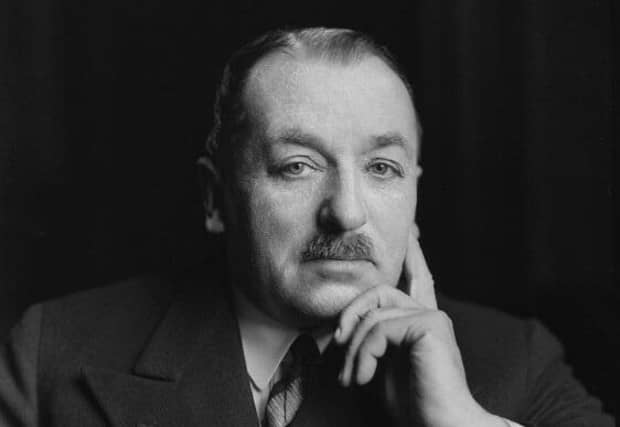

A new series featuring significant people who lived with in Torbay in the 20th century - not always famous - researched by Ian L Handford, president of Torbay Civic Society. Number 1 - Alfred Ernest Brown: This week's feature is of Baptist and politician
A new series featuring significant people who lived with in Torbay in the 20th century - not always famous - researched by Ian L Handford, president of Torbay Civic Society. Number 1 - Alfred Ernest Brown:
This week's feature is of Baptist and politician Alfred E Brown whose father, a prominent Torquay Baptist, had witnessed young Alfred develop an amazing voice and deliver his first sermon at age just 13.
Born in 1881, the family residence was in Rock Road and young Alfred was educated at the British Schools in Abbey Road. From his earliest years he was part of the Upton Vale Baptist Movement and even became involved in its Endeavour Movement.
As a competent speaker, he was locally a popular Baptist and at Sunday School met his future wife, Isabel Eva Narracott from the well-known local family.
Alfred joined the army in 1916 and served with the Somerset Light Infantry. He was awarded the British Military Cross and, later, achieved the Italian Star for Valour.
With the war over, he had a chequered career by standing for Parliament more than twice before after the help of local Conservatives, he gained the Liberal seat at Leith.
Once established in the House of Commons, he was noted for his splendid verbal deliveries resulting in him earning the nickname 'son of thunder' due to his incredible stentorian voice. It was the National Liberal Coalition of 1931 that elevated him to become Parliamentary Secretary at the Ministry of Health, which he held for many years.
Meanwhile in Torbay, he became a Freeman of Torquay and, in 1935, was sworn in as a member of the National Privy Council and appointed Minister of Labour overseeing the Unemployment Insurance (Agricultural) Act of 1936 after he steered the Bill through the House.
He became secretary of Torquay Athletic Club, a role retained for years, and eventually sailed with the famous Julie Brise vessel in the Coronation Regatta of 1937. Then, in 1939, he earned the dubious record of replying to more than 100 Parliamentary questions during a single sitting of the House after which he was cheered by all Cross-Benchers.
Throughout his life Ernest was always larger than life which ensured ribald comments. Even Prime Minister Baldwin, having spotted him using the House of Commons telephone box, remarked: "He never knew Brown needed a telephone to speak to his constituents in Leith." While another passing MP remarked: "Brown has a voice like a foghorn." Alfred replied: "Yes, the voice is the most personal thing about a man."
A lifelong love of reading made him a voracious collector and a library of some 11,000 books were amassed in Torquay on subjects as diverse as religion, poetry, philosophy and Parliamentary issues.
Meanwhile, cartoonists nationally lampooned him continually and one - 'A Popular Encore' - had him depicted leading holidaymakers on a merry dance across a seaside beach.
Eight original drawings were presented to Torre Abbey after his death by the family which by appointment may perhaps still be viewed.
As Chancellor to the Duchy of Lancaster, he was Minister of Aircraft Production in Churchill's caretaker Government of 1945 and was then awarded a Companion of Honour in the same year while acting chairman of the European Committee of UNBRA.
He spent 14 years in government and was always supportive of ministerial colleagues which was somewhat controversial in that era. His retirement from politics came in 1945.
From 1948-49, he became president of the Baptist Movement of Great Britain and led the Baptist's Men's Movement while remaining a Member of the Free Church Federal Council.
Forever, a dedicated worker to the Temperance Movement, he similarly supported all social causes throughout his life. In 1957, Isabel Eva and Alfred finally celebrated their golden wedding anniversary, and later Ernest experienced his first seizure, which sadly restricted that enthusiasm for life. He died on February 16, 1962, in a London hospital at age 81.
A copy of an A3 article on Alfred Ernest Brown is available by sending two first class stamps and a small stamped addressed envelope to Torbay Civic Society at Suite 1, Business Centre, 4 Palace Avenue, Paignton TQ3 3HA
Ian's comment: This amazing lifestyle involving religion and politics was never the easiest of choices. Next week: The theatre's Larry Grayson