

Dr Peter Moore: Widespread industrial unrest following 21st century plaque

Just outside the campus of my old medical school in the City of London is a square which I was told was a plague pit from the great plague of 1665. It hit the headlines more recently during the building of cross rail, now the Elizabeth Line. During the
Just outside the campus of my old medical school in the City of London is a square which I was told was a plague pit from the great plague of 1665.
It hit the headlines more recently during the building of cross rail, now the Elizabeth Line.
During the excavations they discovered a plague pit in the square. Had this piece of local history been forgotten or did no one tell the press that it was already well known and, no, I was not a student in 1665.
The excavations did help the archaeologists to confirm that the great plague of London was caused by the bacteria Yersinia Pestis, which had been widely suspected. In London, the plague killed an estimated 100,000 people in 18 months - almost a quarter of the population.
Barts, my training hospital, was there in 1665 but there is little evidence that it did much to help. In fairness, there was very little that could be done in the 17th century.
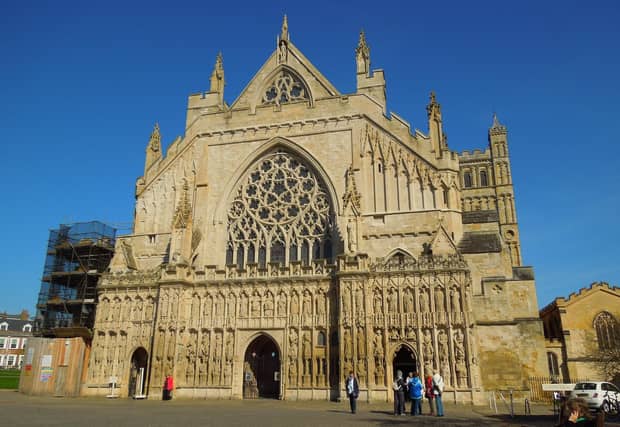
Exeter cancelled large fairs and placed watches on all the entrances to the city preventing people and goods coming in from London. This appears to have helped. It was certainly more effective than the other remedies such as treacle, crab’s eyes or smoking tobacco.
But this was only the second, and far smaller, plague in England. Between 1346 and 1353, the Black Death killed about 200million people throughout Europe and a third of the population of England.
At one time so many priests died that it was difficult to arrange funerals. The east Devon village of Colyton lost four vicars in seven months. In Exeter, half the clergy died.
But there were also major social changes. Until the plague most people worked on the land as peasants. They worked for the one master on one estate. They had no choice. But after the plague there was a labour shortage. Suddenly labour became scarce. The peasants could move to a different estate for better conditions.
People also started to ask questions. Why are the ruling classes so powerful? This cumulated in 1381 with the peasants’ revolt. Although historians argue that it is a misnomer and was not just peasants, a large number of people marched on London.
They burnt down the Savoy Palace, the home of the King’s uncle and the site of today’s Savoy Hotel. They then marched to the Tower of London, broke in and killed the Archbishop of Canterbury, the Lord Chancellor and Lord High Treasurer.
It was finally settled at Smithfield, again, just outside my old training hospital. Although the leader, Wat Tyler, was killed, it led to the government abandoning the poll tax, the relaxation of the restriction on wages, and peasants being able to buy their freedom.
We have we just suffered another great plague, this time Covid, although it did not kill one third of the population. Will this 'plague' also lead to changes? I am not suggesting that the Archbishop of Canterbury or the Lord chancellor are at risk and storming the Tower of London seems unlikely, but it has already led to some changes.
Just like in the 1350s, there is a serious labour shortage. Although King Richard II did not have to cope with Brexit, England was in the middle of the Hundred Years’ War against France, a row with Europe even bigger than Brexit.
Today, workers are not peasants and are not tied to their master’s estates but there is a shortage of labour. It is possible to shop around for better pay and conditions. We may not have a full-scale revolution, but we are seeing serious widespread industrial unrest.
It is always dangerous trying to find precedents from history. In the 14th and 17th centuries they did not have a vaccine but there is a precedent for today’s unrest. If there had been nurses, paramedics and train drivers in 1353 or 1665 would they have gone on strike? Probably.