

Dr Peter Moore: Discovery of insulin

A paper published in the early 20th century made an important discovery. The research at Liverpool was carefully carried out. The only problem was that within ten years it was shown to be completely wrong. There was a theory that diabetes was caused by
A paper published in the early 20th century made an important discovery.
The research at Liverpool was carefully carried out.
The only problem was that within ten years it was shown to be completely wrong.
There was a theory that diabetes was caused by the lack of a hormone from the pancreas.
It was already known that damage to the pancreas could lead to diabetes.
The scientists took a pancreas from a dog, mashed it, boiled it and fed it to a diabetic dog.
It made no difference to the diabetes and so they concluded that whatever caused diabetes, it was nothing to do with a hormone from the pancreas.
Luckily, the theory that diabetes was due to the lack of a hormone from the pancreas survived even if the dog did not.
Diabetes had been known since the ancient Egyptians and is described on a papyrus from 1550BC.
The name diabetes was given in the first century from the word for a syphon as people with untreated diabetes become severely dehydrated from passing urine.
For many years Greek, Arab, Egyptian and Chinese doctors were all aware of diabetes but had no idea of the cause, only that it was a death sentence.
In 1776, Dr Matthew Dobson realised that the urine from diabetic patients had a sweet taste although I do not want to know how he found out.
It was then called diabetes mellitus. Mellitus is Latin for honey - sweet.
In 1916, Sir Edward Albert Sharpey-Schafer, who must have had a very long name badge, suggested that a substance which controlled glucose in the blood was released by some 'islands' in the pancreas call the Islets of Langherans.
As it appeared to come from islands, he proposed the name 'insulin' from the Latin 'insula' or island. It is why we still call people insular.
In July 1921, a Canadian surgeon Dr Frederick Banting and a 22-year-old medical student Charles Best working at the University of Toronto successfully isolated insulin.
They separated the islets of Langherans from the rest of the pancreas in dogs, isolated it and injected it into a diabetic dog. It worked.
As with all research they did not work alone but were supervised by the head of the department, Professor MacLeod.
They also had help from a young biochemist James Collip.
Collip was clearly very bright. He enrolled at the university when he was 15 and was awarded a PhD in biochemistry at the age of 24.
Dr Banting was given the Nobel prizes in 1923 along with Professor MacLeod.
Insulin was then extracted commercially from pigs and cows and saved thousands of lives.
Pork and beef insulin worked in people but was not exactly the same as human insulin.
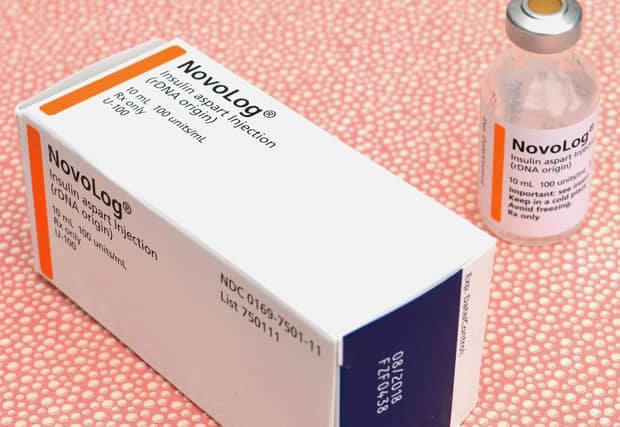
Today, modern insulin is made artificially and is accurate human insulin.
Now, 100 years after Banting and Best’s breakthrough, we can monitor blood sugar accurately and control the amount of insulin needed.
In 1936 it was noticed that some types of diabetes did not respond to insulin as well as others.
We now call these, imaginatively, type one which responds well and type two which was then called insulin resistant.
It is easy to look back on the earlier research and find numerous flaws.
Insulin is a delicate protein. Just mashing up a whole pancreas means that all the chemicals which are used in digestion are released which would immediately destroy insulin.
Even if the insulin survived, it would be destroyed by boiling and then further destroyed by giving it by mouth.
It could not survive all the digestive juices in the gut.
The research scientists at Liverpool were wrong but all research is useful. The lesson we all need to learn is that being wrong can be helpful.
We also must look sceptically at every scientific conclusion.
Whenever anyone looks at the newspaper and asks 'why do scientists keep changing their minds?' just be grateful that scientists are open minded enough to change their minds.