

Dr Peter Moore: Coronation celebrations begin amid generational divide over future of the monarchy
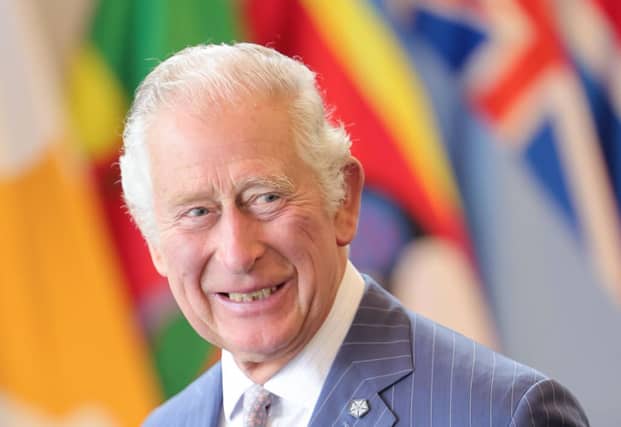

Enjoy the holiday and coronation of King Charles III, although some Scottish Catholics thought that Bonnie Prince Charlie was really Charles III. He wasn’t very Scottish but had much better PR and better folk songs. Despite an emerging republican moveme
Enjoy the holiday and coronation of King Charles III, although some Scottish Catholics thought that Bonnie Prince Charlie was really Charles III.
He wasn’t very Scottish but had much better PR and better folk songs.
Despite an emerging republican movement in the UK, the latest Gallup poll showed that 58 per cent of the population support the monarchy with only 26 per cent opting for an elected head of state.
But there was a generational divide - 78 per cent of the over-65s support the monarchy but only 32 per cent of the 18-24 year olds. This may not be a problem for the future of King Charles as 78 per cent of the younger group were not interested.
A national newspaper headline 'four in ten young people support abolishing the monarchy' is not accurate. There is a difference between not supporting the monarchy and wanting it abolished. No one will man the barricades to fight for a cause when they don’t care. It is not a soap opera they follow.
Any change would need a referendum and we have learnt from bitter experience that they can be divisive. Should we change 1,000 years of history after a vote of 49 per cent against 51 per cent on a low turnout?
When people argue for an elected head of state, I am not clear what kind of president they want. Early republics were modelled on monarchies. Around the world, the type of president reflects the role of monarch at the time of independence.
America and France became republics at the end of the 18th century when monarchs were powerful and appointed their own ministers. The legislature was not the executive but was there to oversee the government. This is still the role of the presidents of France and the USA.
Countries which became republics later, such as Germany, Ireland and Israel, have an elected president with little power. Power lies with parliament in a similar way to our monarchy.
What is often overlooked is that the monarchy is not a rigid, fixed system but has changed radically over the last millennium.
Anglo-Saxon kings were not automatically inherited, although the son of the king had an advantage. They were, of course, all men.
In our history William the Conqueror, Henry IV, Henry VII and William III all came to power through a coup. George I had a very dubious claim but was a protestant even though he did not speak English.
When Victoria came to the throne in 1837, the monarchy was unpopular and had not recovered after the debauchery of George IV seven years earlier. But with the help of her husband, Prince Albert, she changed the image to the quintessential Victorian family.
Again, her son, Edward VII made the monarchy much closer to the people.
I see the monarchy rather as Winston Churchill saw democracy, 'the worst from of government - except for all the others that have been tried'. It is completely illogical in the 21st century to have an inherited head of state with no power but, surprisingly, it seems to work.
Japan, one of the most successful countries in the world, modelled their constitution on ours after the war with an inherited emperor and elected government.
It looks as though Charles will continue the evolution of the monarchy, slimming it down to only working members of the family and, perhaps, reducing the number of palaces. He might look at the Scandinavian monarchies for ideas.
Whatever their views on the monarchy, the coronation celebrations and bank holiday should be fun with fireworks, live music, picnics, parties and a large screen to watch the ceremony on Torre Abbey Meadows.
I suspect the monarchy will survive to see coronations for William and then George although I am unlikely to be around. In a typically British way, the monarchy will probably muddle through.
For any republicans, remember it is possible to enjoy a party even if you disagree with the politics. After all, we join in with the Americans to celebrate July 4 even though it was a British defeat.