

Lesley Drew: From seaside escape to holiday hotspot: The story of Paignton
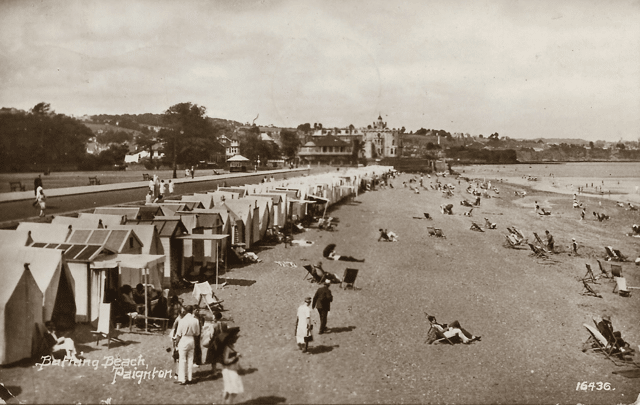

How railways, beaches and changing travel trends shaped the town’s tourism over two centuries
The coming of the railway in 1859 heralded the start of Paignton’s journey to becoming a holiday resort.
However in the early part of the 19 th century Torquay was already the place to visit and maybe have a house. The wealthy and the aristocracy were drawn to Torquay by its mild climate and beautiful surroundings. Many of the villas in and around Wellswood were constructed then together with elegant rows of houses such as The Terrace built in 1811 and Beacon Terrace dated 1831.
Paignton’s development started in the second half of the 19 th century. The marshland had been drained and houses and business built leading down to the sea. Whereas Torquay had no interest in attracting the working classes other than as servants, Paignton was for every one and it had the one thing Torquay lacked, a large sandy beach.
Travelling to Paignton became easier and to accommodate visitors hotels and guest houses were appearing. Probable the first was owned by Arthur Hyde Dendy and known as the Dendy Hotel (later the Esplanade) opened in the 1880s standing opposite the pier, it can still be seen today as The Inn on the Green. Now closed it is soon to be developed as a conference centre. Dendy Hotel which became the Esplanade Arthur Hyde Dendy also owned the pier with its many visitor attractions and a fleet of horse Drawn bathing machines on Paignton Beach. These were pulled out to sea for the ladies who, having changed into bathing gear, could swim in the sea.
Paignton Beach was ladies only; men swam in Preston. Two other early hotels the Gerston and Baileys Hotel were constructed 1880s. At the beginning of the 20 th century it started to become easier for wealthy people to travel to the continent and the appeal of Torquay started to wane. Paignton however grew as a holiday resort mixed bathing now allowed and popular. By the 1920s it was thriving. It was becoming fashionable to sun bathe and Paignton was ideal. More hotels and guest houses opened and travel by car and coach were an alternative to travel by rail. As well as guest houses holiday camps were starting to appear, a cheaper alternative and therefore more affordable for families The early ones included The Nest in Kings Ash opened in 1925 and South Devon Holiday camp in 1931.
The war put a stop to Holidays for a while the beaches were covered in barbed wire and inaccessible. The pier had the centre removed to deter invasion. Many hotels were used as hospitals for injured servicemen. After the war the 40s and 50s were the start of boom years for tourism. Many more houses became guest houses and a number of people took in visitors in their homes. Families would move into garden sheds or outhouses and let out their bedrooms. Breakfast was normally provided but in some cases the visitors were not allowed to stay in the house during the day, not great if it was raining or cold. The boom continued throughout the sixties and into the 70s in Paignton and Torquay. Considered a little upmarket Torquay had shed its image of only being for the wealthy and had developed a thriving tourist industry of its own. It didn’t have Paignton’s beaches but it did have excellent shopping facilities which proved popular Holiday camps also increased in number with several in Goodrington and Brixham which are still thriving today.
The 70s saw the beginning of cheap travel to the continent. Spain was, and still is, a popular destination and with the guarantee of fine weather many families started to take holidays abroad and this trend continued The local holiday trade suffered, guest houses closed and reverted to private homes. Many hotels were converted into flats or residential homes. Some were pulled down and the land used for housing. Torquay lost many of its shops and became a less attractive place to visit for shopping. Holiday camps and self-catering accommodation however were still popular.
Recently, off-season holidays and short breaks appear to have grown in popularity and Torbay has adapted to this new trend. Paignton still has a large number of visitors staying in and around the town in a variety of accommodation. Many changes have been made to the town and surrounding area. The future of the tourist trade is bright; Torbay has a great deal to offer.
Paignton Heritage Society is a group dedicated to preserving the history of Paignton. We have a large archive in our Heritage centre in the Library and our Archivist is working hard to make it easier for people to access. Our monthly meetings are held on the third Thursday of the month in Gerston Chapel Torquay Road at 7pm. We have a talk on a topic of local interest and on May 21st the illustrated talk is entitled Paignton past, Paignton present, and will look at some of the changes which have taken place. Everyone is welcome. Entrance is £5 (£4 to members of PHS )and includes tea/coffee.
Kirkham House, dating from 1390, situated in Kirkham Street will be open on both Bank Holidays in May (4 th and 25 th ) from 1pm to 4pm. Guided tours of the house are available and accompanied visits to the Clink and the Bishops Tower for early arrivals.
Our website has been redesigned and holds a wealth of information on paigntonheritagesociety.co.uk.