

Ann Widdecombe: A tribute to former minister who made Dartmoor her home
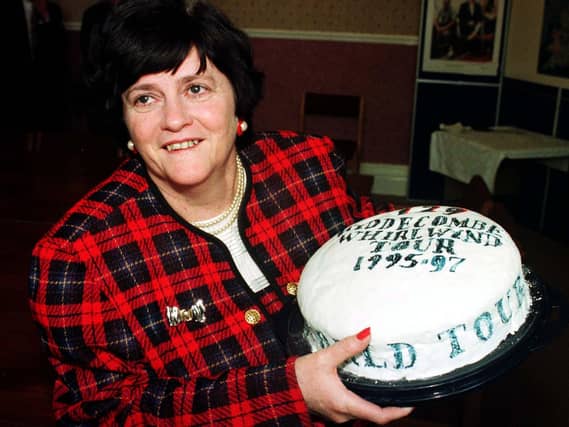

Tributes flood in for "formidable, gutsy and fiercely herself" former minister who made Haytor her home.
She swapped the green benches of Westminster for a swimming pool and a colony of garden gnomes on the edge of Dartmoor, and by the time she was done, Ann Widdecombe had become as much a part of this moor as its granite tors.
Following her death at her home in Haytor Vale, at the age of 78, this newspaper looks back on the life of a woman who was, by universal agreement of friend and political foe alike, never anything less than entirely herself.
Tributes have poured in from across the political and entertainment worlds, with figures from every party praising a woman who was never afraid to say exactly what she thought.
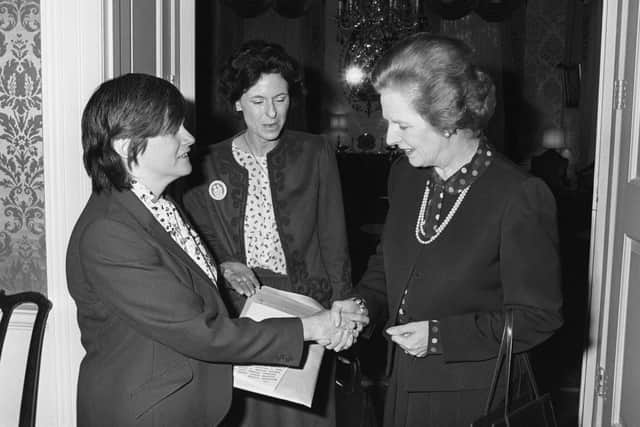
Conservative leader Kemi Badenoch called her "a formidable politician who was never afraid to speak her mind and fought hard for what she believed," adding that her politics were "strongly guided by her faith and her values."
Former Prime Minister Boris Johnson remembered her as "a heroic Brexiteer and a great speaker" who could move an audience to what he called ecstasy.
Reform UK leader Nigel Farage, whose party she joined in her seventies, said she had played a decisive part in delivering Brexit and would be missed by all who knew her.
For a woman who spent more than three decades in the public eye, it is a measure of her impact that so many different admirers, from opposite ends of the political spectrum, all reached for the same words: formidable, gutsy, straight-talking.
Ann Noreen Widdecombe was born on 4 October 1947 in Bath, the daughter of a Ministry of Defence civil servant. Her parents were both West Country people, her father from Saltash, her mother from Plymouth, and it was a heritage she was immensely proud of, tracing her family's connection to the region back to 1715.
As a girl, she would walk with her father on Dartmoor, planting a seed of affection for the moor that would eventually bring her home.
She was educated partly at the Royal Naval School in Singapore and at a convent school in Bath, before going up to the University of Birmingham to read Latin. She later switched disciplines entirely, studying Philosophy, Politics and Economics at Lady Margaret Hall, Oxford, where she served as secretary and later treasurer of the Oxford Union, an early sign of the political ambition that would define her life.
After a spell at Unilever and then as a university administrator, she entered frontline politics properly in the 1980s, standing unsuccessfully in two seats before finally winning Maidstone for the Conservatives in 1987. It was the beginning of a 23-year parliamentary career.
In government under John Major, Widdecombe rose from junior social security minister to Minister of State for Prisons, a job she took seriously enough to visit every prison in the country. She was combative and unapologetic in the role, and it was as Shadow Home Secretary in the years that followed that she delivered the line for which she is still best remembered, describing a leadership rival as having "something of the night" about him, a phrase that entered the political lexicon and is widely credited with ending his leadership hopes.
She was, throughout, someone whose convictions ran deeper than party management.
She turned down a place in Iain Duncan Smith's Shadow Cabinet on principle, campaigned against the Conservatives' "A-List" candidate policy under David Cameron, and in 2019 walked away from the party she had served for more than three decades over its handling of Brexit, standing instead for Nigel Farage's Brexit Party and winning a seat in the European Parliament.

She would later join Reform UK, serving as its immigration and justice spokesperson until her death, proof that retirement from the Commons in 2010 was never really retirement from public life at all.
It was outside Westminster, though, that Widdecombe won over an entirely new audience.
Her stint on Strictly Come Dancing with partner Anton Du Beke became one of the show's most fondly remembered pairings, not despite her lack of natural rhythm but because of it.
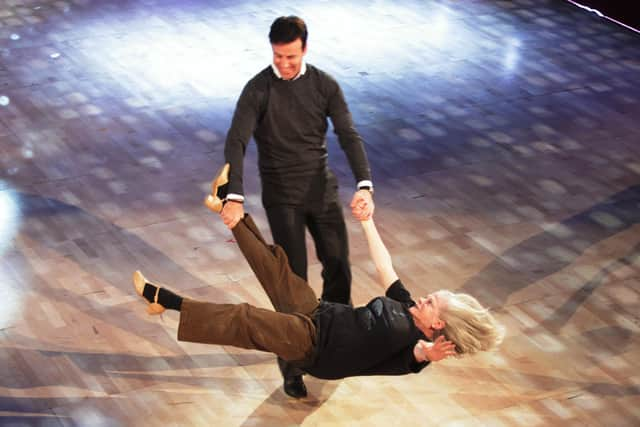
As she put it herself, Anton realised within half an hour that she couldn't dance, and neither of them much minded; they decided simply to enjoy themselves, and the public adored them for it.
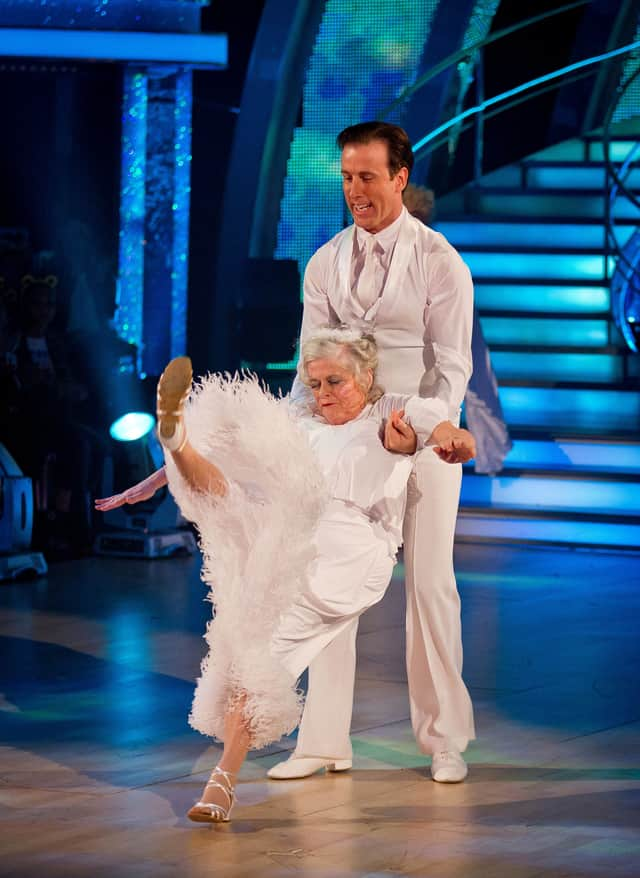
She later appeared as a runner-up on Celebrity Big Brother and took to the stage in pantomime, playing the Empress of China in Aladdin and the Wicked Queen in Snow White.
She became a fixture of British current affairs broadcasting too, a regular panellist on Channel 5's Jeremy Vine show, whose host described her, on hearing of her death, as "one of the most extraordinary politicians of the age" and someone who had become deeply woven into his working life. In more recent years, she also appeared regularly on GB News and continued to write, including a Substack newsletter carrying her thoughts on the issues of the day.
Widdecombe bought her house in Haytor Vale in 2008, two years before she finally left Parliament, and once installed, she embraced the isolation of Dartmoor wholeheartedly.
"There is nothing in Haytor except a pub, The Rock Inn, and there's no place better," she said. "And there's a post box. That's it, and that's what I wanted." She had little patience for anyone who assumed she might be lonely: her friends, she said, were scattered across the country and would come to visit her, helped, she liked to joke, by the fact that she had a swimming pool.
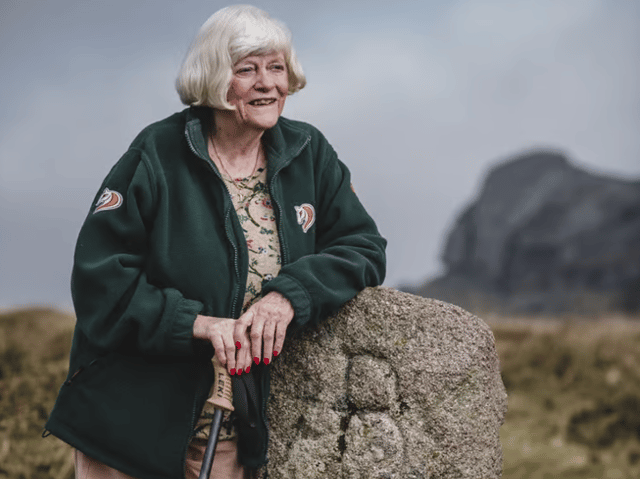
She was, above all, a walker. She described a favourite circular route from Haytor to Bonehill, on to Hound Tor and back, taking in the old Haytor Granite Tramway along the way, and would go out a couple of times a week, rain permitting.
It was a habit that went back to childhood walks with her father, and one she credited with giving her a genuine, lasting love of the moor in all its moods, bleak and dramatic in winter, thick with gorse and heather in summer. In 2012, she even fronted a BBC programme on the myths and legends of Dartmoor, delighting in tales of stone circles, ghost hounds and old moorland folklore.
Those who knew her locally saw a softer, more whimsical side, too. Visitors to her garden would find a small colony of garden gnomes, added to each year with a trip to the gnome shop at Dartmeet, a ritual she shared with visiting children, who would choose a new gnome each time to place beside her lily pond.
For all her national profile, it was here on the moor that Widdecombe chose to spend her final years, and local reaction to her death has been heartfelt.
Former constituent Celia Moore, who knew her as her MP in Kent, remembered her simply as "a gutsy lady... we need more MPs like her." John Southcombe recalled her as "a great friend to Widecombe History Group," while others online remembered a woman who was "brilliant" and would be "sadly missed."
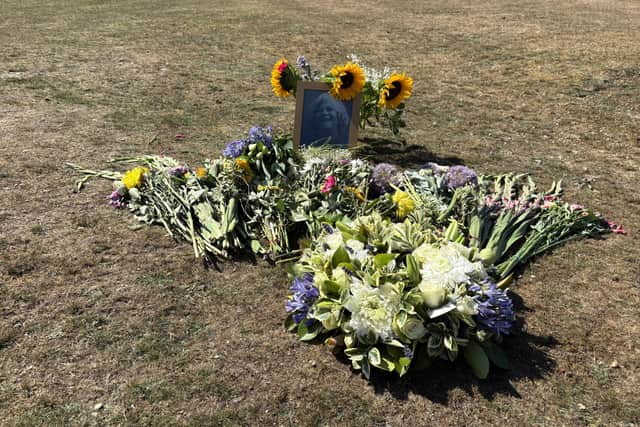
Devon and Cornwall Police and Crime Commissioner Alison Hernandez, who laid a floral tribute on behalf of the region, said she had long admired Widdecombe's "tenacity and belief in freedom of speech," and passed on the family's own wish: that she be remembered, "for who she was and what she achieved, not how she died."
"I love Dartmoor. It's wild, and I am very glad it's not as popular as some other places, as it is not overrun."
Widdecombe never married and had no children, and was famously guarded about her private life, batting away questions on the subject for decades with characteristic bluntness, once remarking to an interviewer that it was "nobody else's business."
She was known for her devout Roman Catholic faith, having converted from Anglicanism, and for a lifelong fondness for animals; she adopted goats at a Kent sanctuary, supported a donkey charity in the West Bank, and wrote warmly of the cats who shared her homes over the years.
She is survived by her nephew, Roger Widdecombe, an Anglican priest. Her brother Malcolm, an Anglican canon, predeceased her in 2010; her mother Rita, with whom she shared her London home for many years, died in 2007.
Devon and Cornwall Police continue to investigate the circumstances of her death.
Her family have asked that she be remembered, in the words of Police and Crime Commissioner Alison Hernandez, "for who she was and what she achieved, not how she died", as a woman of conviction, wit and warmth, who found as much joy in a Dartmoor walk or a garden gnome as she ever did on the floor of the House of Commons.