

A tall order for flaming June will mean sky's the limit in borders
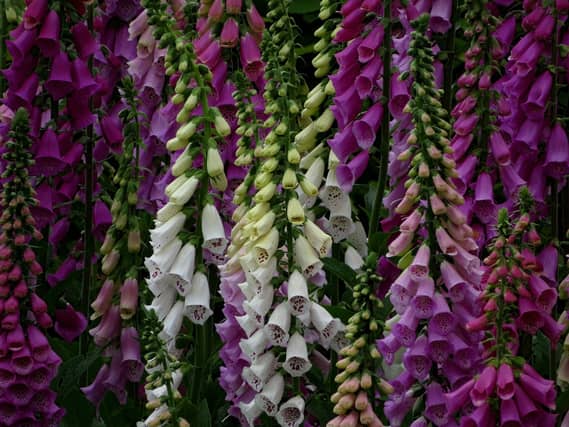

Flaming June has arrived and we’ve now directed our worrying to watering and keeping the flower borders and veg patch going. The deluge of rain we’ve encountered in spring has created a flush of green across the county and the wildlife seems to be thriving because of it. This means more pollinators and an increased opportunity for plant fertilisation. Just look at the amazing pointed foxgloves in the lanes and cottage gardens spiralling skywards.
With a higher water table the perennials are thriving with their deeper roots but the annuals will need watering sensibly. Now any risk of frost has (fingers crossed) disappeared we can broadcast poppy seeds on bare earth. Since they are precocious about having their roots even slightly moved then they love being sown directly. Another great thing about sowing poppies is that they have a very quick turnaround from sowing to flowering. If sown now they will be in flower by mid August and will be discreetly self seeding themselves in autumn ready for next year.
If there are other empty spaces in the beds you can treat yourself at the garden centre to a perennial that will defy any future droughts or at least make it through the time you’re away for a summer holiday.
Great additions for drop in plants are Achilleas of different colours planted together. ‘Cloth of Gold’ and ‘Lilac Beauty’ will give a pastel purple and yellow partnership that’s different from the common colour combinations, but at times much more striking.
Scaboius is a reliable perennial and fills spaces easily as well as most salvias that will push upwards through neighbouring plants to show their tiny imperial purple bells.
Dropping in a few foxgloves will ensure you won’t need to worry about tall colour in future years. They are biennials so cover all bases by planting a few next year as well and you’ll have them every year as they love to self seed alongside poppies.
Having a packed border is what most flower gardeners aspire towards. It’s a great trick that can mean you don’t need to weed or hoe until all the foliage dies back which leaves more time for a sun lounger or garden bench to be put to good use.
On the Plot
Capitalise on the time of year for outdoor direct sowing by neatly seeding drills of leeks or whatever winter brassicas you eat. The skill of allotment gardening is having one eye on future seasons. Having said that, imagining a packed winter bed at this time of year can trigger us into dark thoughts of frozen ground, but do it anyway as that’s how we get through winter.
Keep nipping out side shoots from tomatoes. It’s amazing how quickly they grow and start to feed twice a week once the tiny green orbs appear as future fruits on the vine.
Don’t ignore fruit trees as they can really suffer in the heat and dry. Just a bucketful of water here and there will make all the difference to their health and most importantly to us, their fruit production.
First early potatoes have been ready for a while now so get them up and eaten with butter and some mint leaves.
The space they leave, and you'll need some space can be followed by hardy root crops like carrots, parsnip and beetroot. If you fancy being alternative then plant salsify or the black variety. There is a little known perennial root vegetable called ‘skirret’ that was popular prior to carrots being imported. Whilst it is a member of the carrot family it tastes slightly peppery with a hint of sweetness. Like a cross between a carrot and baby turnip. It's worth giving it a go in a patch of reclaimed weeds and it will sit quite happily through all weathers looking pretty at the same time.